G R I T
Queer stories from rural America
Curated narrative by Anna Stephen Tanner
Photography by Anna Stephen Tanner
Interviews by Chloe R. LaDuc
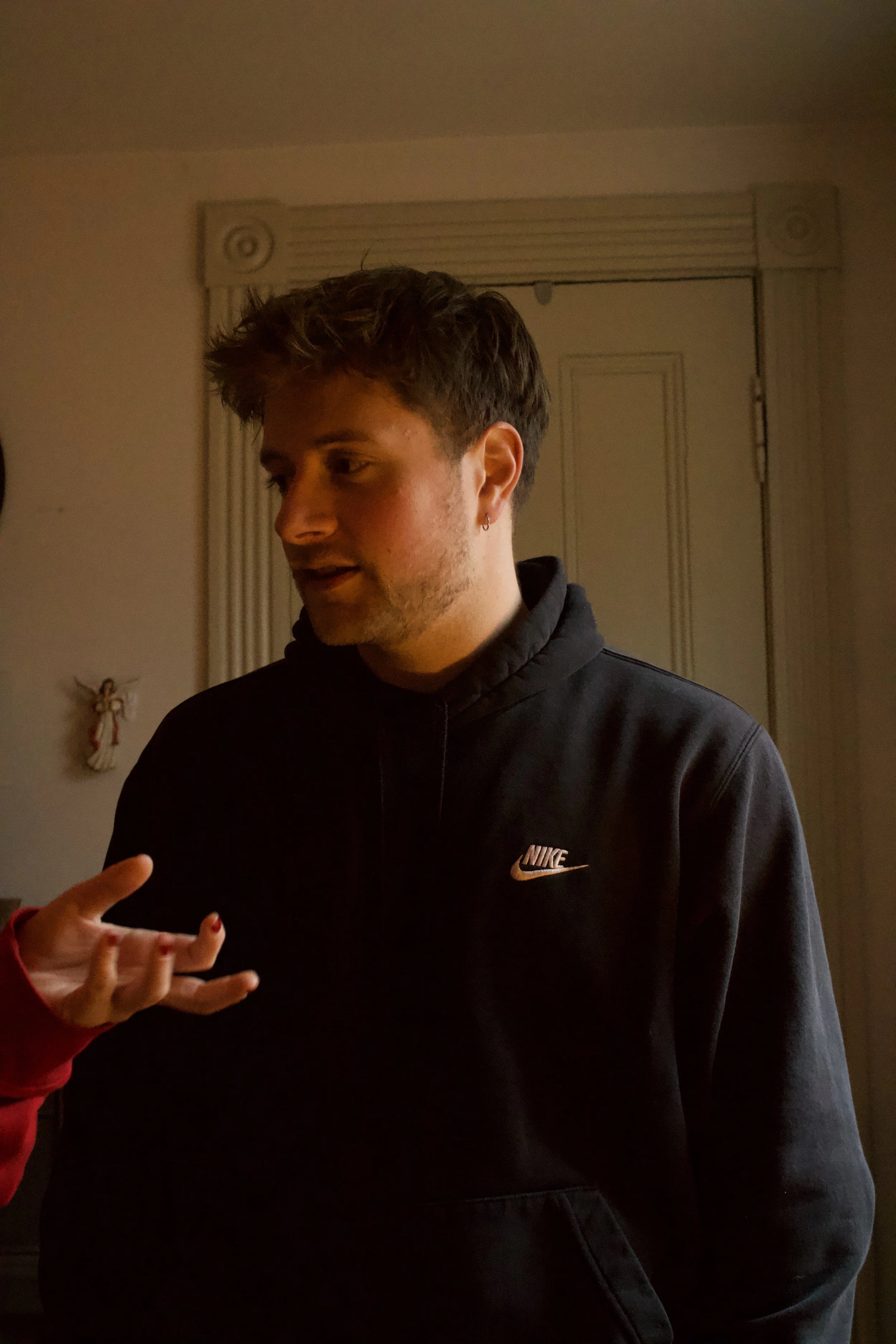
AYDEN
Mexico, NY
Population 1,548
Chloe: So who are you and can you tell me a little bit about where we are today?
Ayden: My name is Ayden, and we are in my bedroom in Geneseo, NY. Where I go to college.
Chloe: Can you tell me about what life is like here?
Ayden: At our house it's become a very special place very quickly. I moved in at the end of summer last year with two good friends and it has just become a very happy house to be in. It's become somewhere where I feel very safe and where I can express my deepest self.
Chloe: Could you speak a little bit towards freedom and what that means to you?
Ayden: Freedom, it's a big word. I think freedom is just to be able to be yourself. I think if you're really free you can just be yourself and in the place that you are, and that's something else for everyone. Everyone is different but freedom is just being truly who you are and feeling comfortable doing that.
Chloe: I also know you as a very deeply spiritual person, can you speak towards your spirituality at all?
Ayden: Yes, to me spirituality is very much individual. There's so much individuality in just being a spiritual person and the biggest thing is just a relationship with a higher power, whatever you want to call it. Where I feel closest to God is outside, I find that time to go out there because I did grow up in a very catholic household. It comes from my grandma who is also a very very spiritual person, very catholic. Whatever makes you feel close to something that's bigger than us and I think that you have to trust that they are there to guide you through life.
Chloe: Thank you for speaking about that. I think it’s a true freedom to allow yourself to fall into a religion you're birthed under and see it differently as an adult. Especially as a queer person who has to go through rethinking their relationship to religion. So I think that's beautiful.
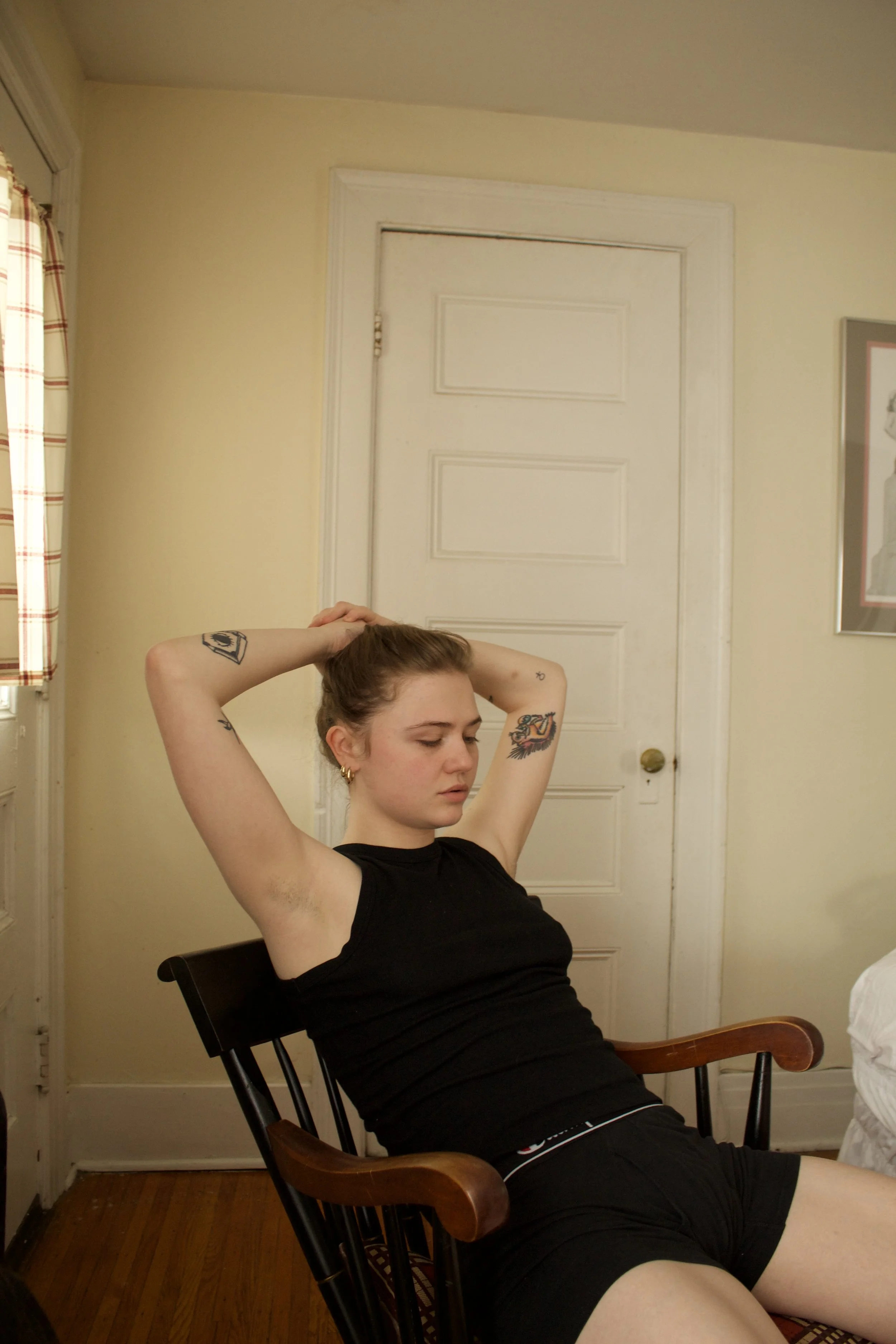
CHLOE
Mexico, NY
Population 1,548
Anna: Can you tell me who you are and a little bit about where we are?
Chloe: My name is Chloe Rose, we're at my childhood home in Mexico NY. It's a small village north of Oswego, off route 104.
Anna: Can you tell me about what life is like here?
Chloe: A way I've always explained it is survivors guilt, none of my friends left, not a lot of people leave and I always felt that I had to leave as a queer woman. Every time I come back I feel guilty for every kid I drive by for the burden that they will have to carry if they happen to be outside of the norm. There are good memories I have of people that I love here, but it's definitely heavy.
Anna: What is your definition of freedom?
Chloe: I think freedom is being who you want to be and loving who you want to love, but also what you want to love. There's a lot of things growing up gender norms wise that you just couldn’t appreciate and things like that, freedom to live your life adjacent to a new way of living, for example leaving the church but still having a personal relationship with God. I think that I can pull values from where I grew up but also be educated on the impacts that it’s had and have an understanding of how I give back to my own community. Allowing myself to feel like that's okay and not pushing that so far away from myself has allowed me to not lose the identity I was born with. I look back on my upbringing and ask myself if the traditional values that shaped me are what sets me apart today when it comes to my queer expression. I never thought I would value my childhood in the way I do.
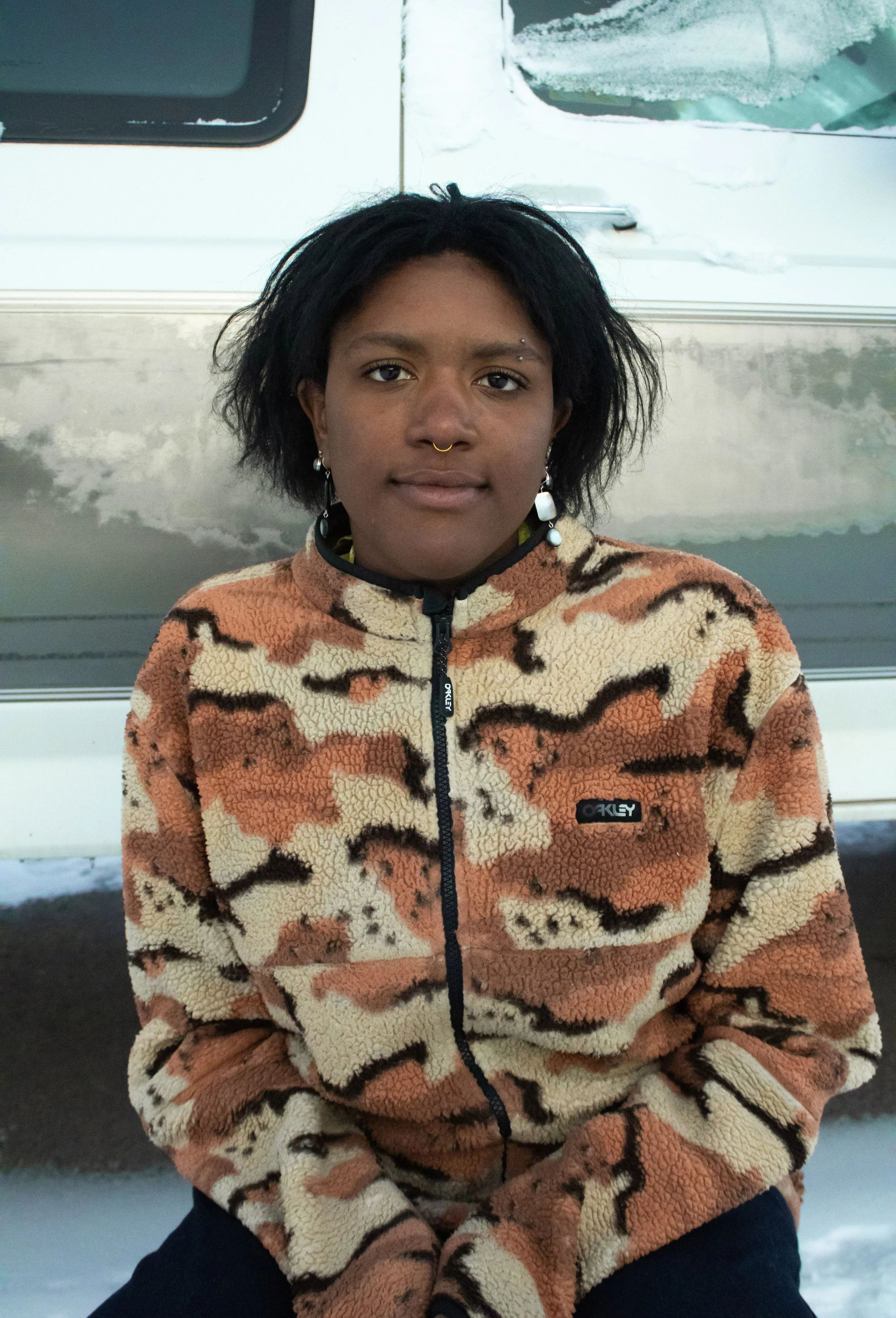
IMANI
Oxford, GA
Population 2,315
Anna: Can you tell me your name, where you grew up, and where you are now?
Imani: My name is Imani and I grew up in Georgia. I lived in a suburb in (Lilburn) Georgia until high school onward where I grew up in a very rural area outside of the city. I acknowledge the suburban part of my childhood, because it was a very harsh contrast when I moved to the country. I grew up around a lot of diversity and then moved into the country which was the opposite. And now I am spending some time living in another rural area, just in the mountains in Colorado.
Anna: What was it like growing up in rural Georgia?
Imani: From my memory I feel like it was pretty segregated where I grew up in Georgia, and there were just really intense race relations. We had this neighbor, this white man who had a Jamaican flag on one side of his shed, and a confederate flag on the other side of the shed which I found just really stupid. It was really isolating living in rural Georgia, people didn’t really get what I had going on. There was a very specific type of black person and a very specific type of white person that lived there, and I just did not fit into any of those groups.
Anna: What helped you through that time of feeling isolated?
Imani: It was a poor area, but my parents happened to live on a stunning property and that was really my saving grace. Living there I just got to be outside as much as I could. I feel like my spirituality is really tied to nature and my body and how impressive both things are functioning. I think that there's different strengths coming from living in the city vs rural life. There is just less human interaction here, and because you have less human interaction you're exposed to a smaller variety of people. So when you meet another queer person there's an instant community.
Anna: Having lived in a rural area that feels pretty constricting for a queer person, how would you define freedom? And what would you hope to communicate to people who have maybe never lived or spent time in rural areas?
Imani: I feel like freedom to me is being able to do whatever you want to do with your life, and with your body. No person is illegal on stolen land, you should be able to live your life freely. I didn't think that people like me lived in these spaces. I've met other black queer women living in rural areas and there's surprisingly more variety here than city people think. There's a whole lot going on in these rural towns, and I am planning on staying here (in rural Colorado) a lot longer than I expected because I feel so connected to the community here.
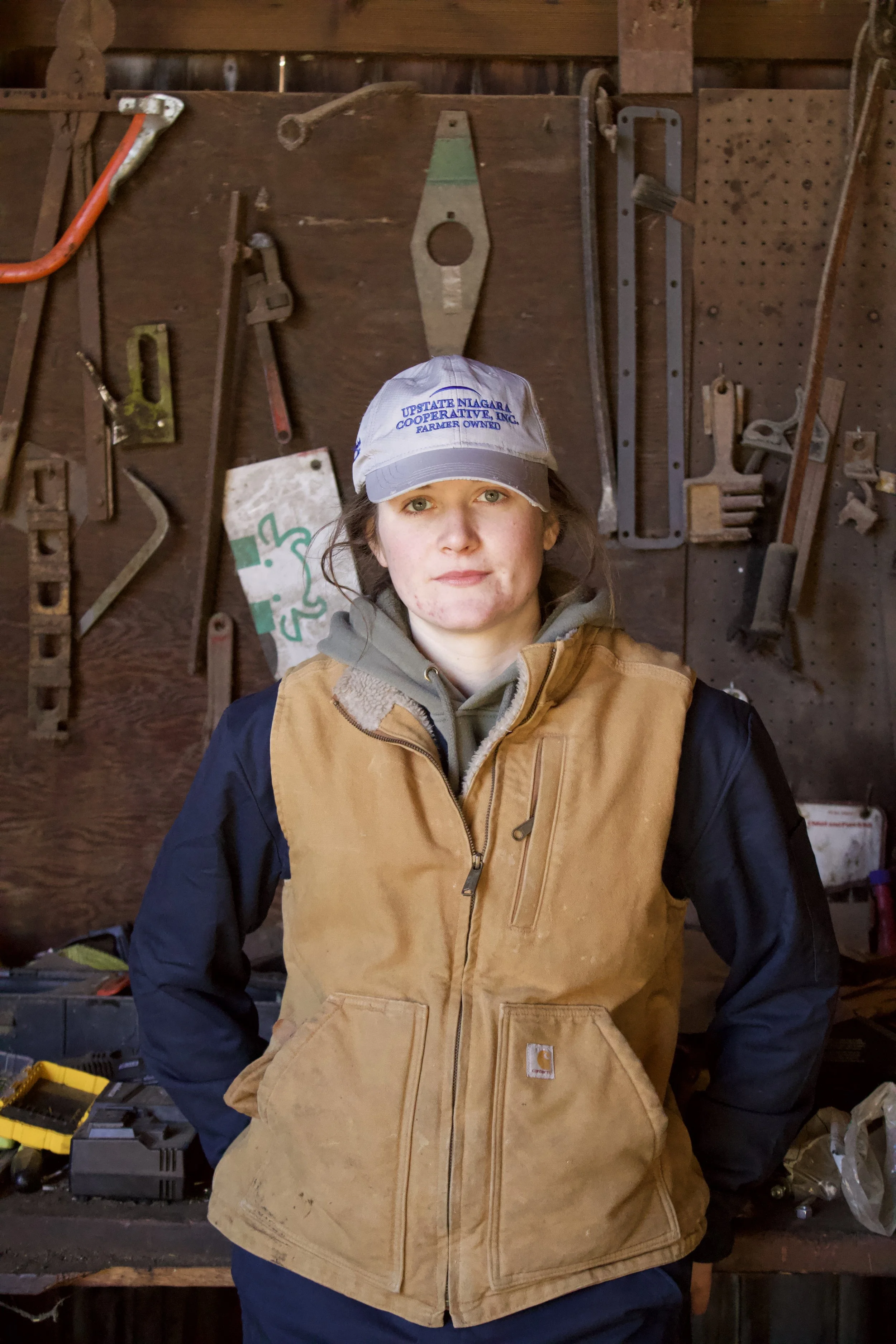
Olivia
Lima, NY
Population 2,092
Chloe: Okay so, how are you and can you tell me a little bit about where we are?
Olivia: I am Olivia Hollenbeck, and we're at Hollenback farms. I'm a dairy farmer, this is my dairy farm.
Chloe: Can you tell me what it’s like to be a farmer?
Olivia: It allows me to fulfill myself, it gives me patience, compassion, discipline, hard work. There's nothing better than this, it's the most simple natural job you could have in the whole world. I don’t have a boss and I don't have a time card. Money is not everything. We create our own happiness here everyday it doesnt come from a check so I am able to explore my passions and be creative and test my brain and my body everyday. It heals me.
Chloe: Do you feel accepted by the farming community? Do you feel as though support would waver if you lacked family notoriety in the area?
Olivia: I think being a new farmer is hard, if you don't know anyone or aren’t established already. I can’t imagine coming in now. I think about that all the time as if he (Olivia's family) wasn’t here I would have no idea what to do. So as much as it is damning to have that generational burden you can’t really thrive without it you would be pretty lost without it. Am I accepted by the farming community? I would say yeah, we're all just out here helping each other, we barter back and forth, me and that guy down the road there. You know we're all just wanting to give and I think that's the difference we are not looking for anything.
Chloe: My comment on that is I think it is also a rare community to be a part of and it's something that’s a little bit of a time capsule.
Olivia: Yeah, I think you're right.
Chloe: Do you think that the farming community allows you to present free of social norms?
Olivia: Absolutely, I can dress however I want, I can show up however I want , I don't put on a skirt and heels. I'm in a vest, I wear a backwards hat everyday… yeah there are no norms as long as I’m not out in flip flops then I’m fitting in.
Chloe: You're where you want to be and who you want to be. My last question is what is freedom to you? If you had to explain freedom to somebody that has only ever known the city streets, what would you say?
Olivia: I would say get outside. Take a road trip, walk around, walk through the woods, I’d say take a second and just slow down. Zoom out for a minute.
Chloe: Would you go as far to say that this is a microcosm of freedom and what that would look like?
Olivia: Absolutely, this is my freedom. There's things I have to do everyday here but when I show up it's not like I feel a weight of pressure, deadlines, expectations, I show up and do my best work everyday, I couldn't ask for more. That's why I am happy to share with you because you know most people don't get to see life like this and it's such a special and unique alternative to the norm I guess, but this is my norm.
Chloe: Welcome to your world right?
Olivia: Yeah, welcome.