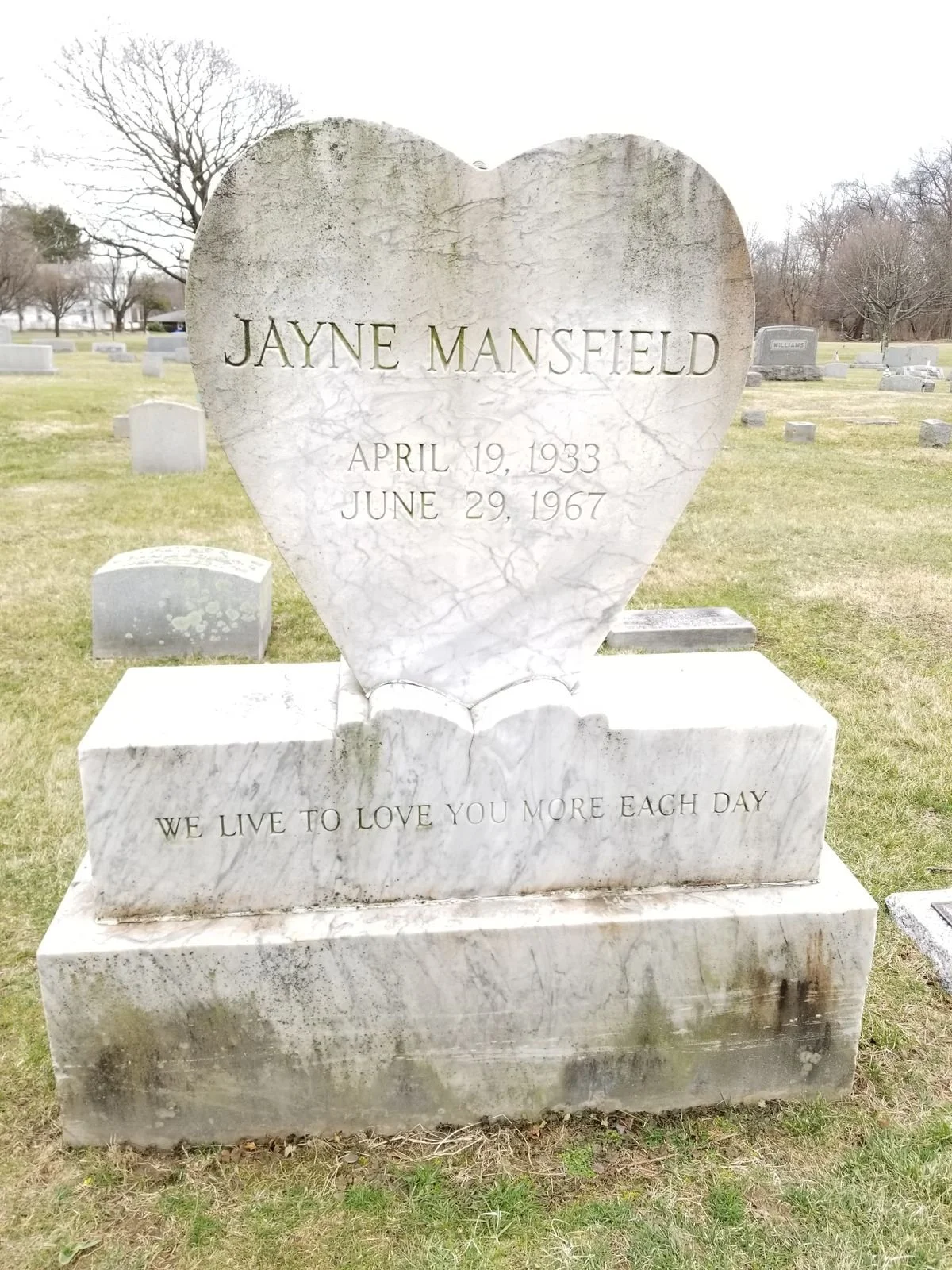
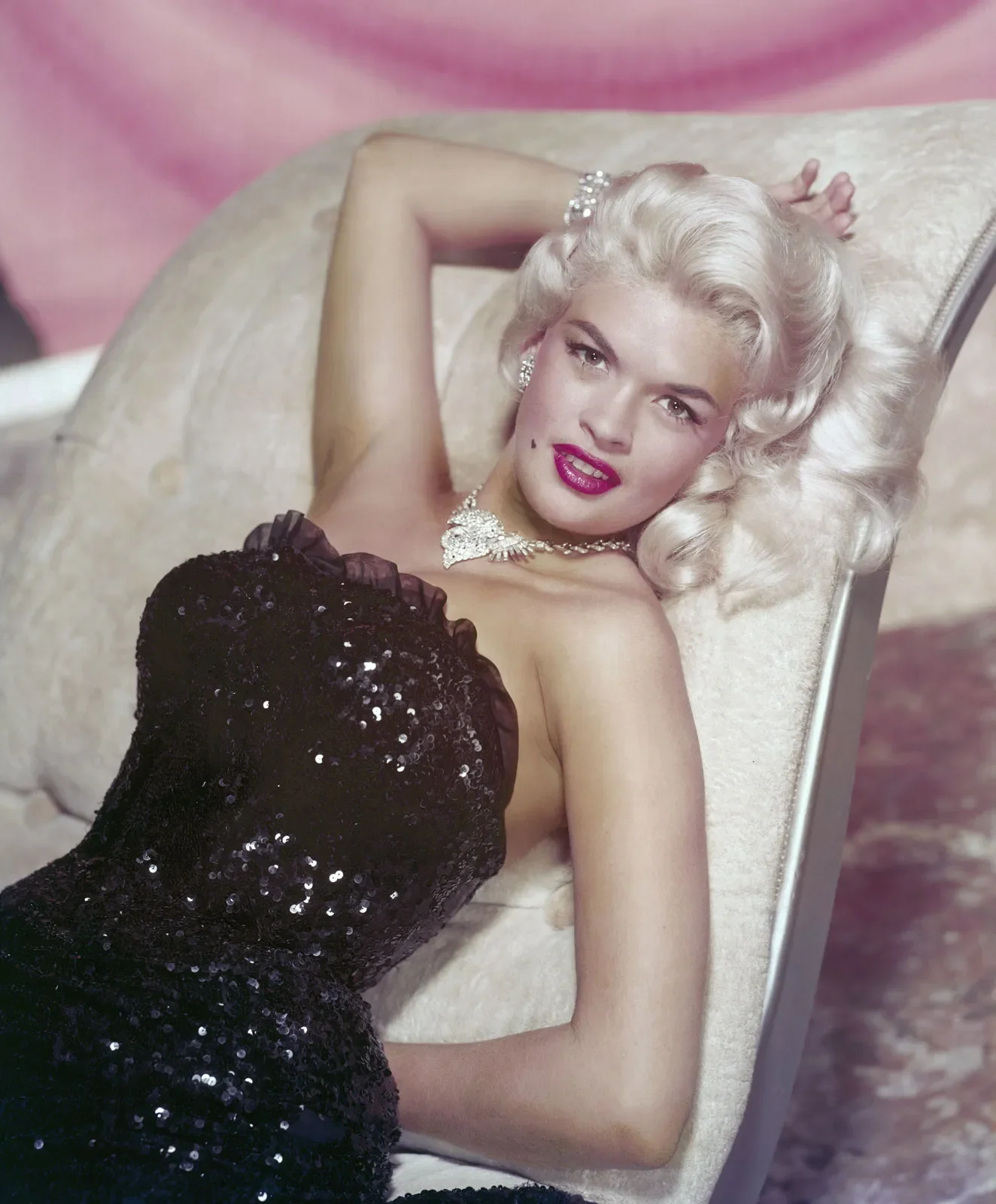
Jayne Mansfield, (1933-1967), was an iconic blonde bombshell, queer icon, and queen of camp. She started as an actress and Playboy Playmate, regarded as “glamour and tragedy all wrapped in one” (from Mansfield 66/67). She was the embodiment of the opposite qualities of what feminists of her time fought to be seen as, receiving criticism from women for her over-dramatized bimbo persona.
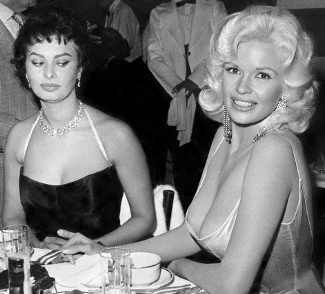
Pictured: Jayne Mansfield and Sophia Loren
In queer culture however she's regarded an absolute icon of divine femininity, and camp, having a postmodern, self awareness about her. She is fully in on the joke.
The Wild, Wild World of Jayne Mansfield (1968), was made one year after Mansfield’s death in 1967. The film shows her touring the world through nightlife, showing Jayne amidst scenes of debauchery and sexuality.
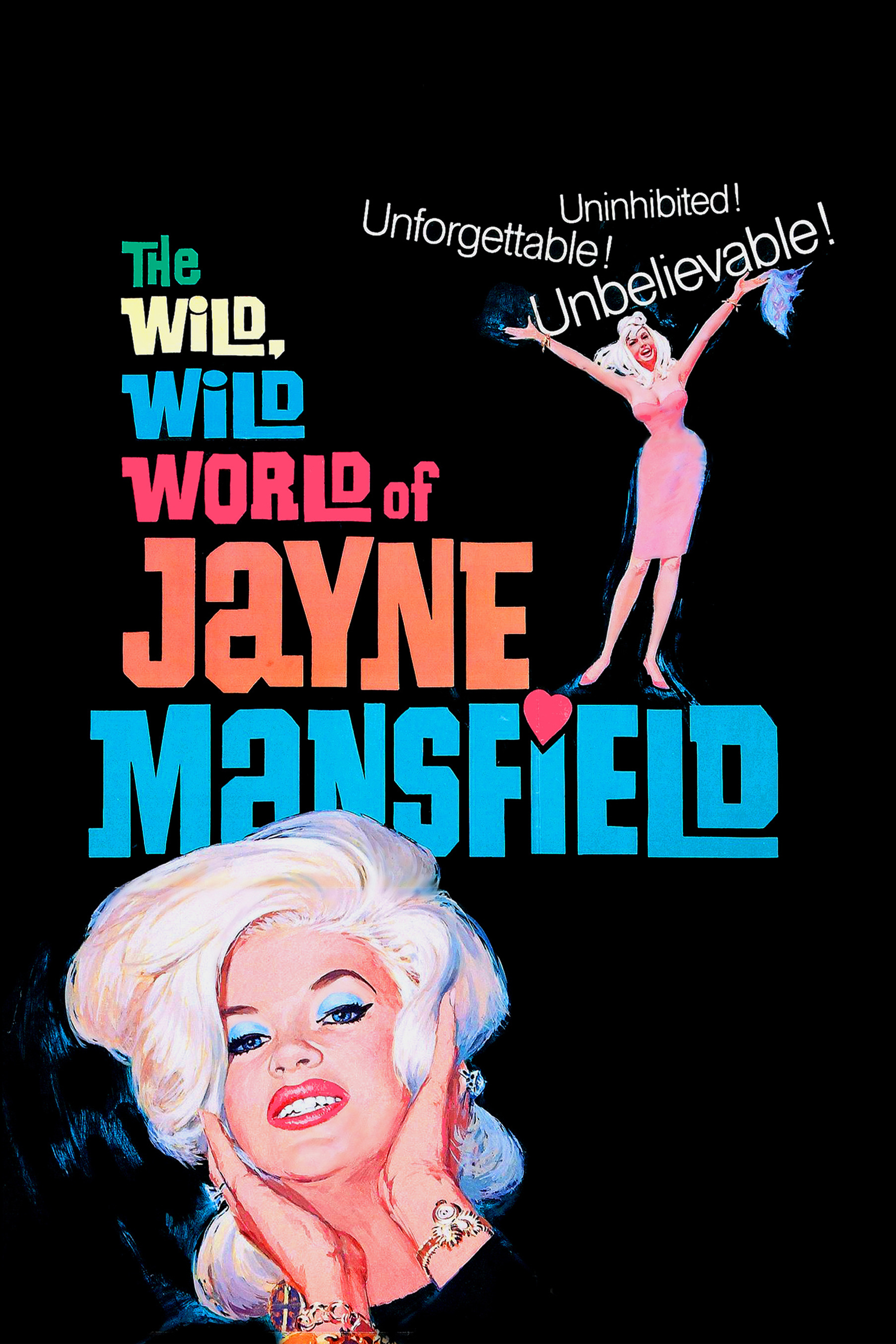
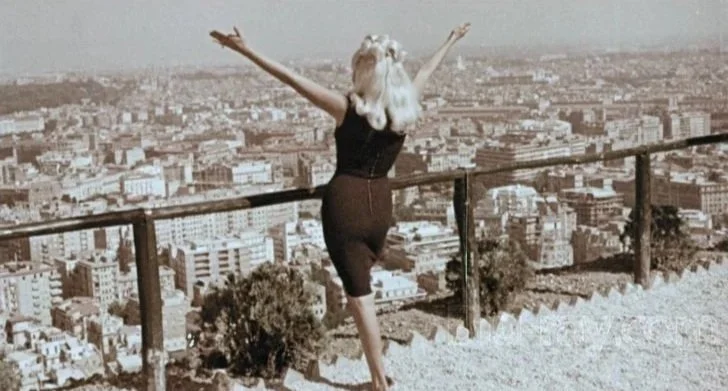
She saunters through the nightclubs with her tiny chihuahua on her hip, her walk an iconic exaggerated Marylin Monroe sway. The film Mansfield 66/67 (2017) looks back on Mansfield’s life and her impacts on queer culture. It features reflections by cultural icons like John Waters (known for his transgressive queer films), Cheryl Dunye (a personal favorite, director of the 1996 lesbian classic “The Watermelon Woman”), and cult classic drag queen Peaches Christ.
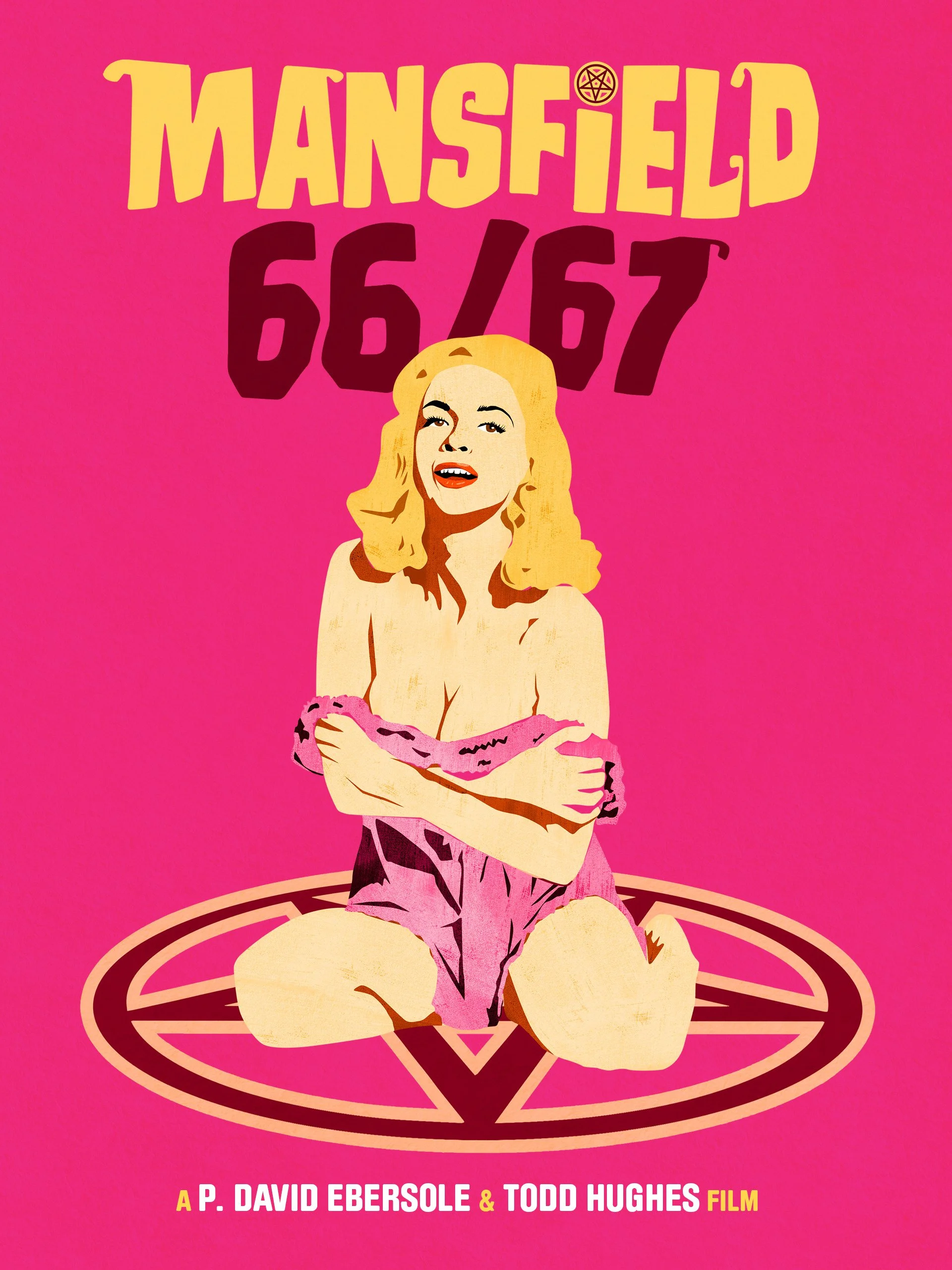
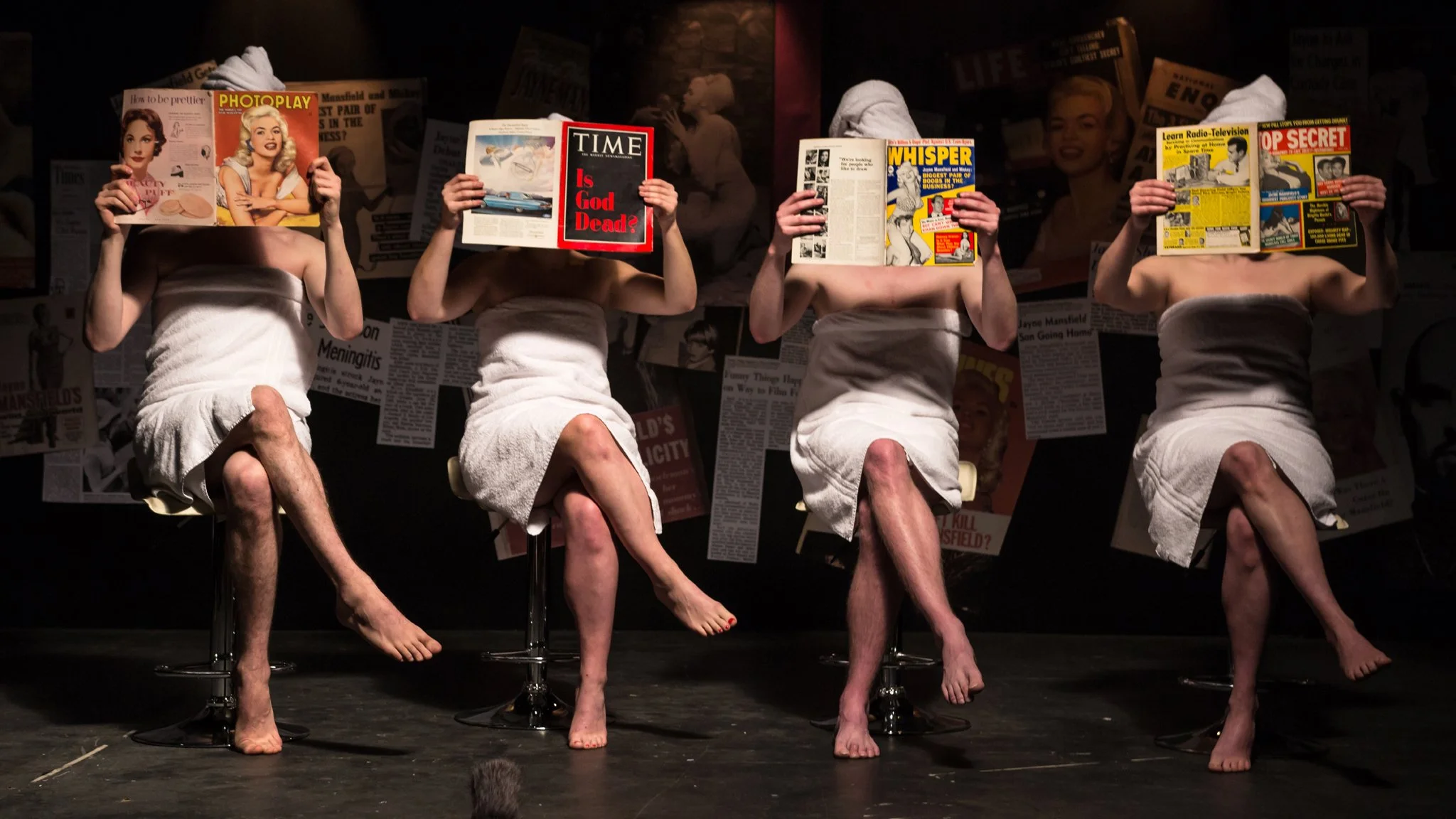
The events surrounding Mansfield’s death are focused on in the film, because of the absolute bizarre, media frenzy moment in pop culture that it conjured.
Mansfield craved the spotlight, having a quirky relationship with Anton LaVey, the campy, unserious leader of the church of Satan in the 60s. They both loved publicity, dramatics, and shock value.
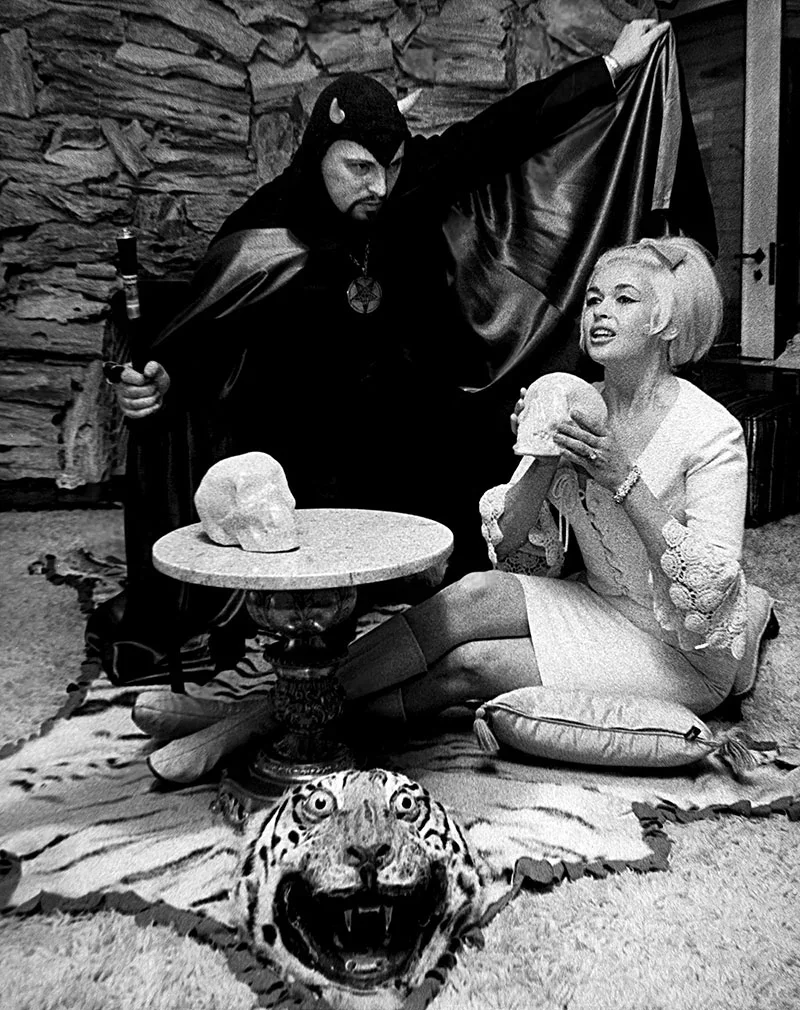
Pictured: Anton LaVey and Jayne Mansfield
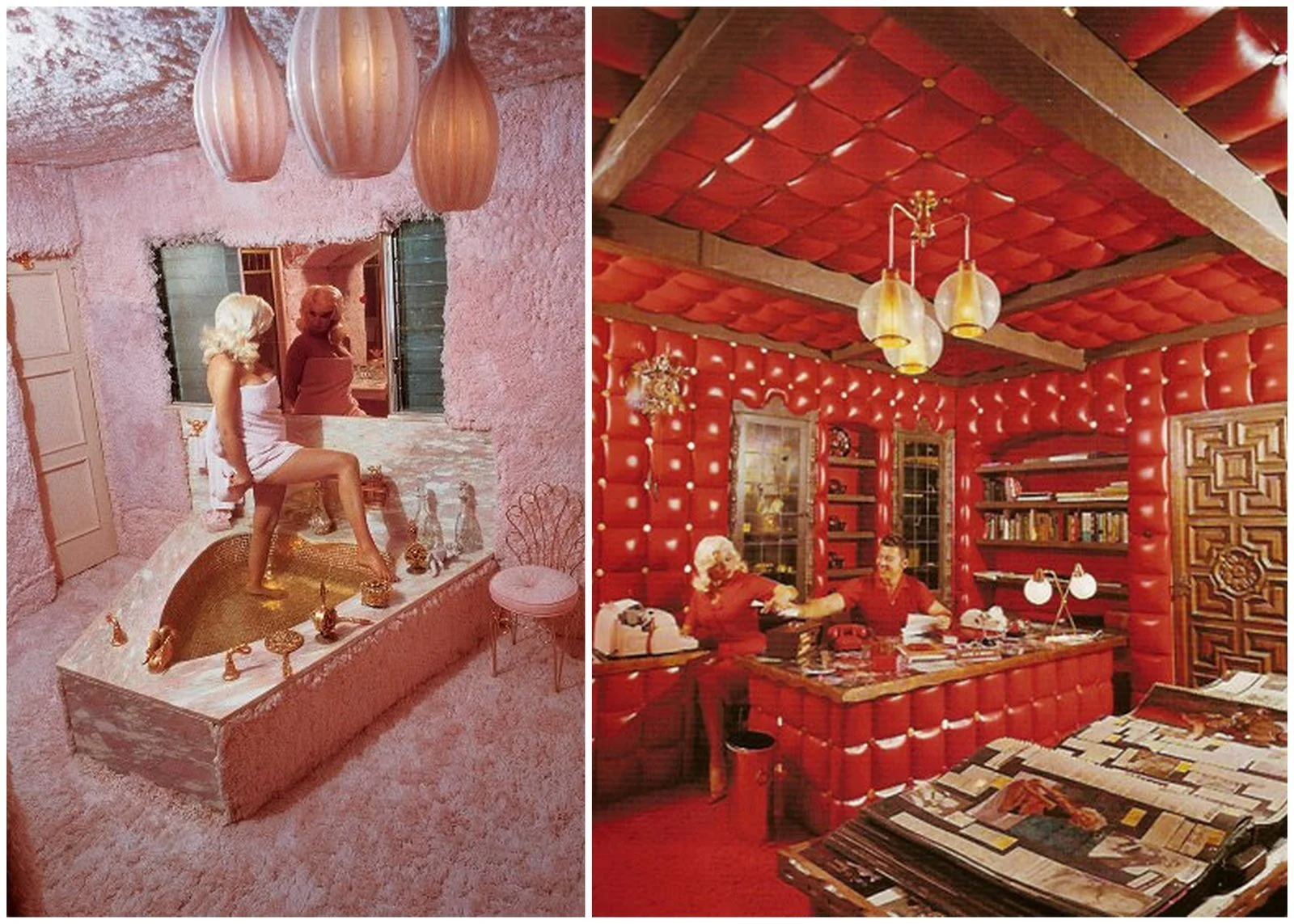
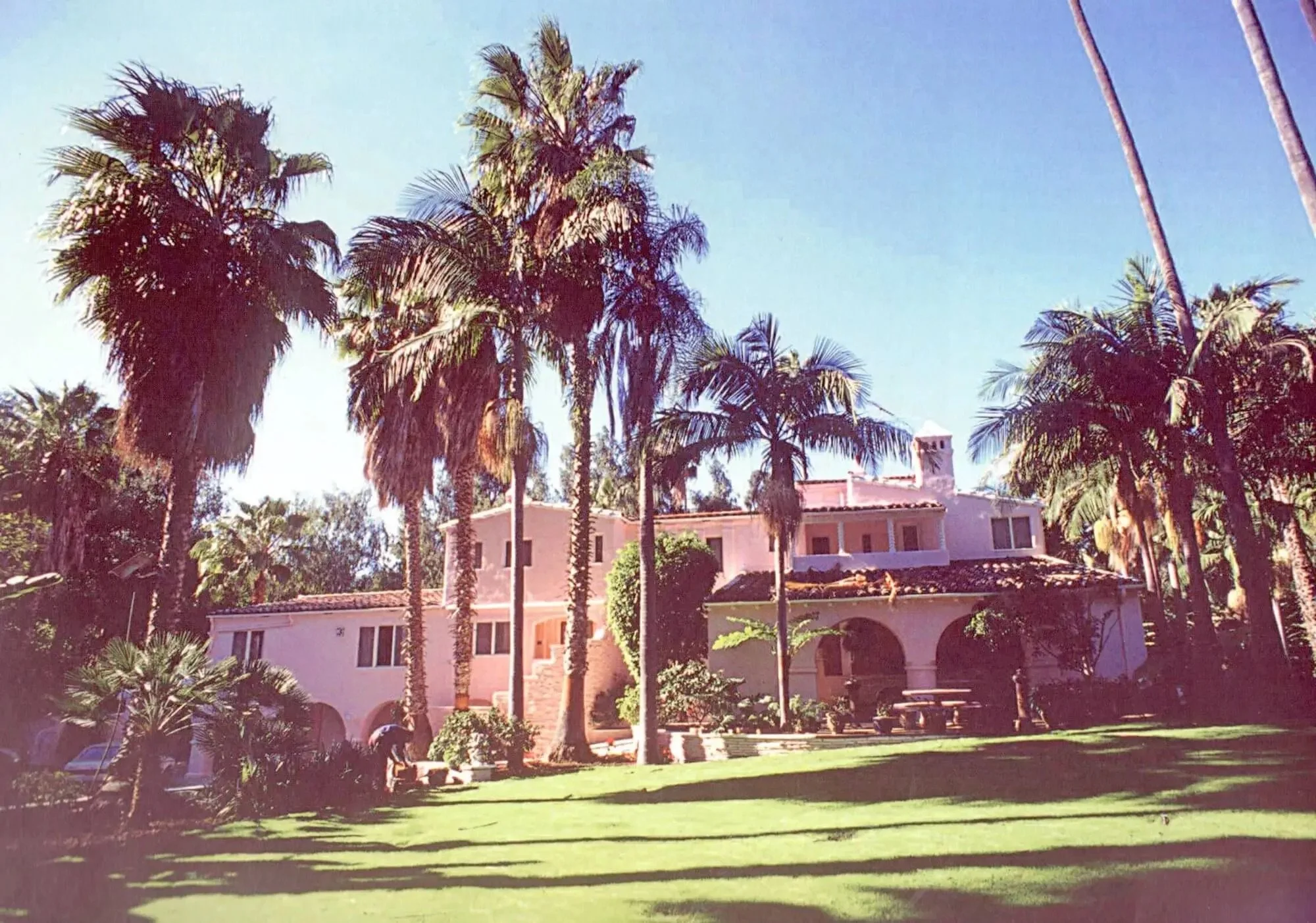
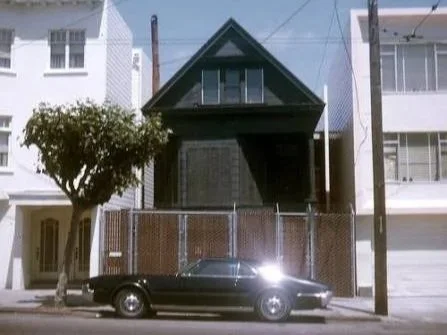
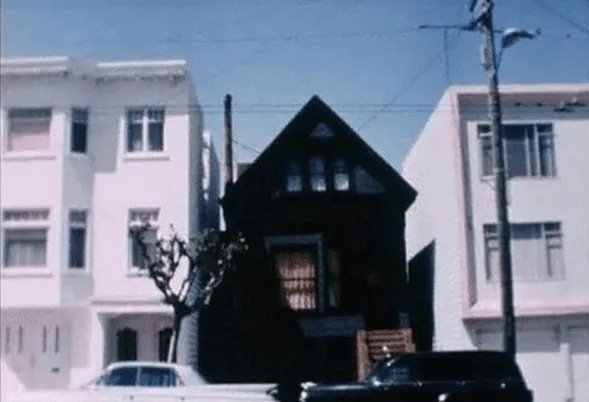
Mansfield lived in what she referred to as “the pink palace”, an all pink mansion with heart motifs everywhere, most famously her heart shaped bathtub. LaVey, in a humorous contrast, lived in an all black building sandwiched between norm-core apartment buildings in San Francisco.
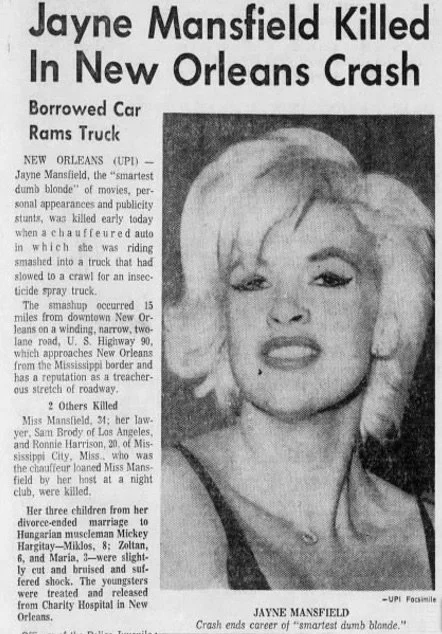
LaVey was rumored to have cast a curse on Mansfield's lover, Sam Brody, out of jealousy. LaVey warned against Mansfield riding in cars with Brody because of the prediction/wish of his demise in a car crash. Brody eerily proceeded to get into 7 car accidents, all however not fatal. Mansfield, however, was not so lucky.
The day of her death, Anton allegedly was cutting up magazine clippings (for whatever reason the leader of the church of Satan engages in arts and crafts, maybe his 1967 mood board) and mid snip, had a gut feeling, turning over the page to reveal a nearly decapitated image of Mansfield on the back. Sure enough, he then heard the news that she had in fact died in a grizzly car accident, crashing into the back of a truck, partially decapitating Mansfield.
What draws me to Mansfield is how incredibly ahead of her time she was. Shame is an under pulse of our world and western culture, particularly in the American south and states ruled by the church. Yet when we think of American iconography we think of individuals such as Mansfield, free of shame and constraint.
The tension created between who we hold up as icons vs what is repressed within American life creates a constant push and pull that keeps the excitement of the media alive. It’s a dance of hide and seek, where one moment the culture is celebrating women's sexuality as empowering, and the next shaming it.
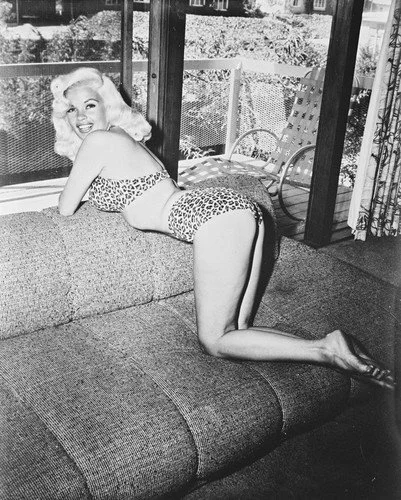
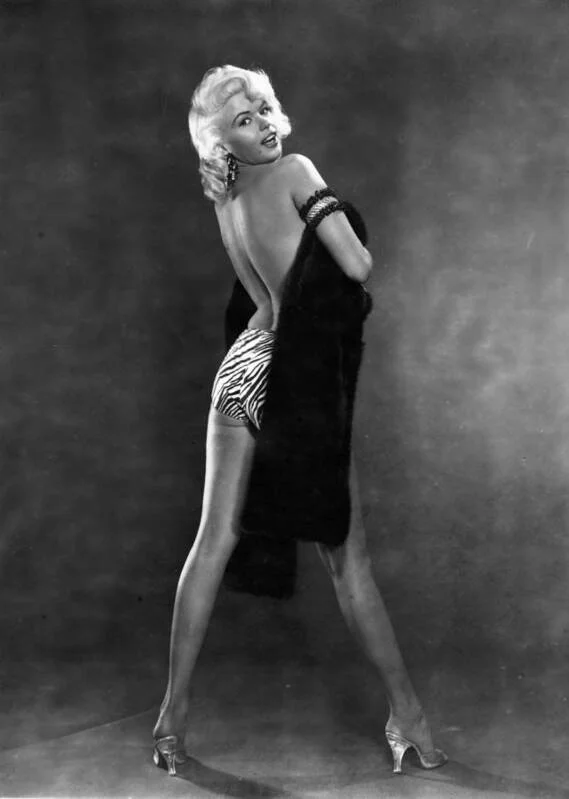
Both Mansfield and LaVey indulged in recognizing parts of the human experience that we all experience yet hesitate to speak about. Mansfield possessed this humor about herself that allowed her to be truly free of shame. The same humor that queer people have harnessed to live freely and coped with life. That freedom is something all of us desire deep down, the ability to exist fully as every part of ourselves without judgement. It’s a question of if you're brave enough to be vulnerable.
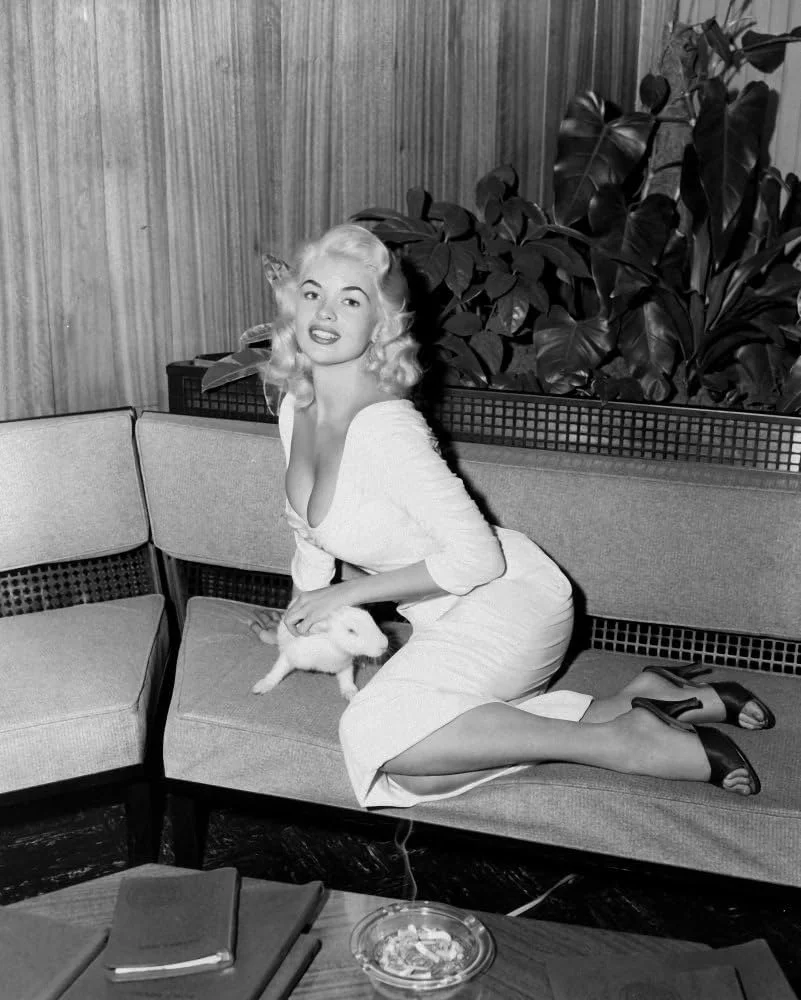
I think this exact sentiment is why she is such a huge queer icon now. As queer people we have to unapologetically embrace ourselves for who we are, there is no other option and it is that serious. Like Mansfield, Loving yourself unapologetically, and indulging in the absolute absurdity of the human experience is how to truly live free. Life is strange, dark, and beautiful, and the tragedy of Mansfield's life is a reflection of a life truly lived.