Breaking Colonial Conventionality: Critical Exhibition Review of Bright Signs: Spotlight on Video Art
By Anna Tanner
October 31 2024
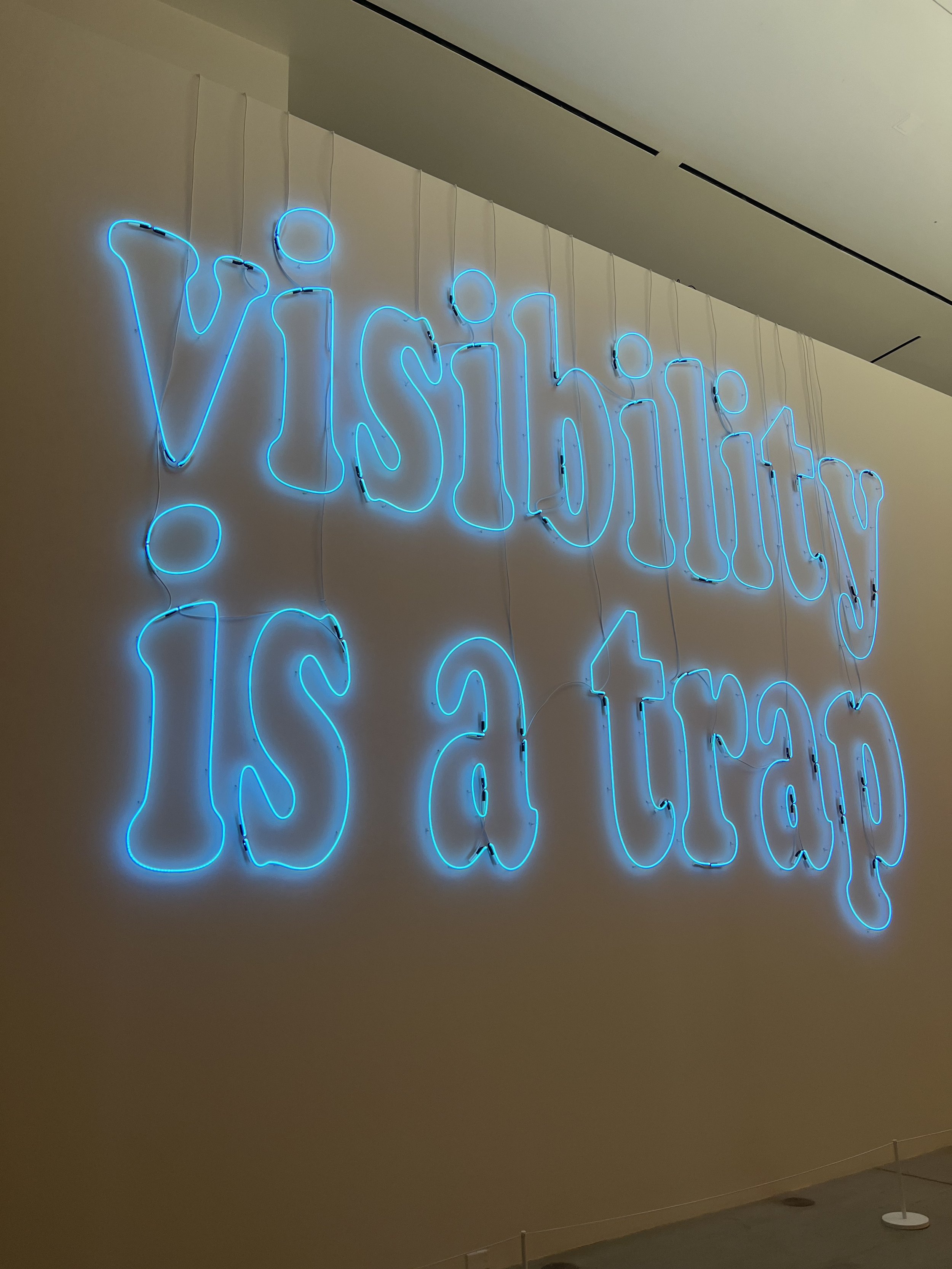
Laurent Grasso’s “Visibility is a Trap” [2019]
Stepping onto the 5th floor of the Art Gallery of Ontario, Laurent Grasso’s “Visibility is a Trap” [2019] confronts the viewer with the phrase written in large looming neon coils. Grasso, sets the tone for the works included in the exhibition, Bright Signs: Spotlight on Video Art curated by Debbie Johnsen, the AGO Manager of Modern and Contemporary Collections. Composed of a maze of intimate rooms containing a variety of video installations and neon sculptures, Bright Signs contains work from 11 leading contemporary artists addressing history, visibility, and power. Infamous video artist Kahil Joseph and renowned installation artist Theaster Gates occupy work in the two main rooms on the floor, both encompassing the thematic through line of the exhibition through video, form, and concept.
Guided into the first room, Kahlid Joseph's video installation “Wildcat” [2016] hangs situated in the center of a large, dimly lit room. Surrounded by quiet observers circling the installation, it hangs reminiscent of a shrine. The focal point consists of three large screens forming the walls of a triangular structure, projecting Joseph's short film upon each side. Dirt lies uniformly beneath the suspended projections acting as an anchor conceptually and literally to the film. The projectors' light create a ghostly quality to the film, showing scenes from a Black rodeo held in the town of Grayson, Oklahoma, previously named Wildcat.
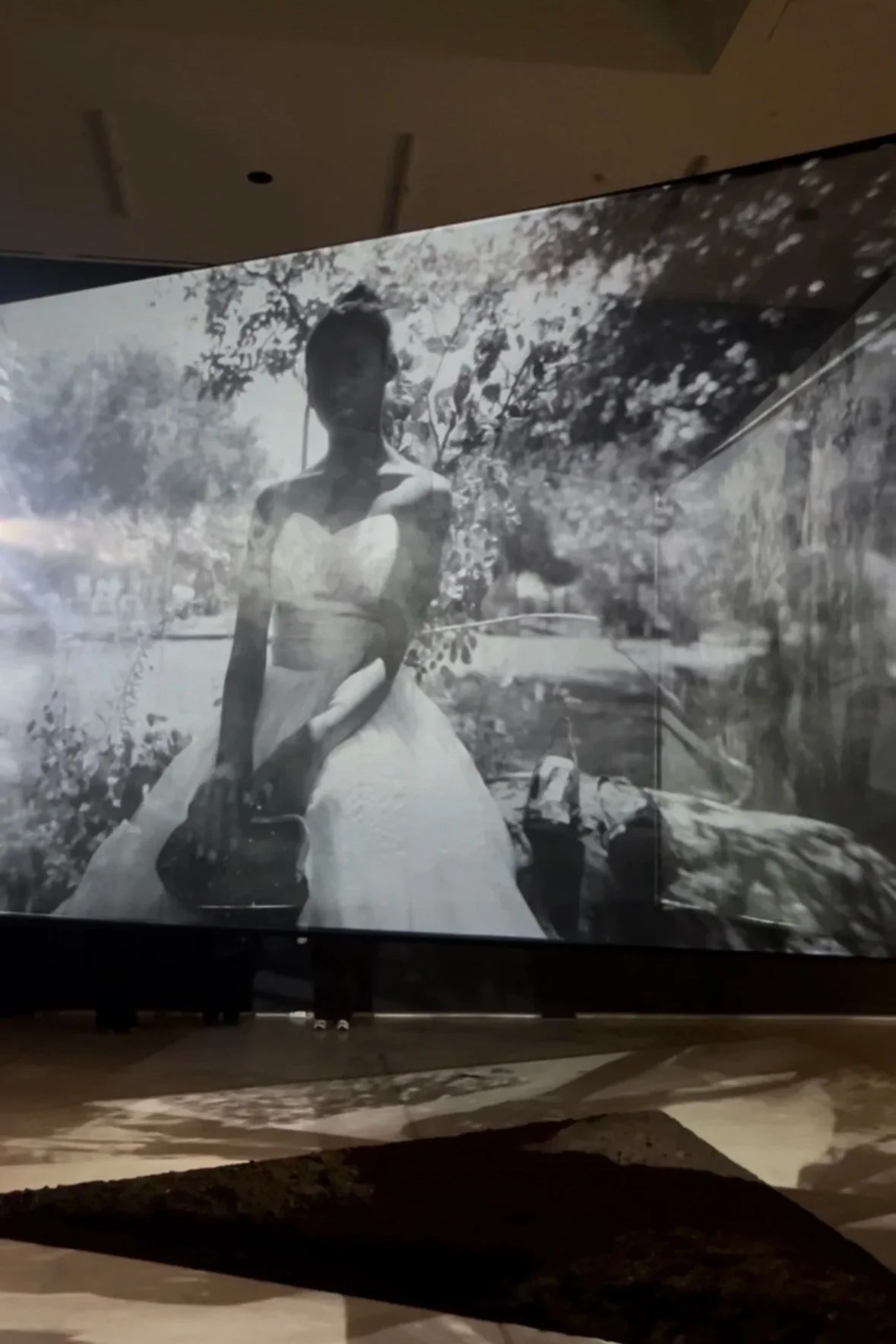
Kahlid Joseph's “Wildcat” 2016
The film, spanning 7 minutes, pays homage to Aunt Janet, the founder of the event, through the imagery of a young girl repeatedly shown in the film. Sanctuary and sacredness encapsulates the dark room, pausing time to focus upon the lives of the community within the small Southern town. The soil adds physicality to the film, creating a makeshift home away from home through views from a world far away from the heart of Toronto. Joseph’s gaze upon the town of Wildcat commands the viewer's attention through the central set up and narrowed in subject focus to acknowledge, as stated by the artist, “Black people are light years more advanced than the ideas and images that circulate would have you believe.” (Joseph, 2013).
In the context of the current pop culture climate, Joseph's work is particularly potent. Joseph has always had a grasp on the current cultural climate, contributing to pop culture and film through his works, Flying Lotus: Until the Quiet Comes (2013); The Reflektor Tapes (2015); Lemonade (2016). With Beyonce's release of “Cowboy Carter” [2024] traditional heteronormative and whitewashed icon imagery of cowboy culture is being broken within the mainstream spotlight. Joseph is exploring concepts almost a decade before the rise of this particular discourse in the mainstream light.
Following the theme of history, visibility, and power within Bright Signs: Spotlight on Video Art, “Wildcat”[2016] embodies the central theme as a whole, specifically addressing perception and preconceptions through visibility. The choice to display the projections in a triangular form, is the only aspect that leaves room for questioning. Perhaps it was to optimize the space or perhaps it adds to the concept of the community within the film being multidimensional, refusing to conform to the typical 2D nature of video installations. Regardless, it is effective in creating an overall feeling of sacrality within the space. Leaving the room, the viewer is guided to Theaster Gates, “Progress Palace”[2016] by the rhythmic beats humming through the 5th floor.
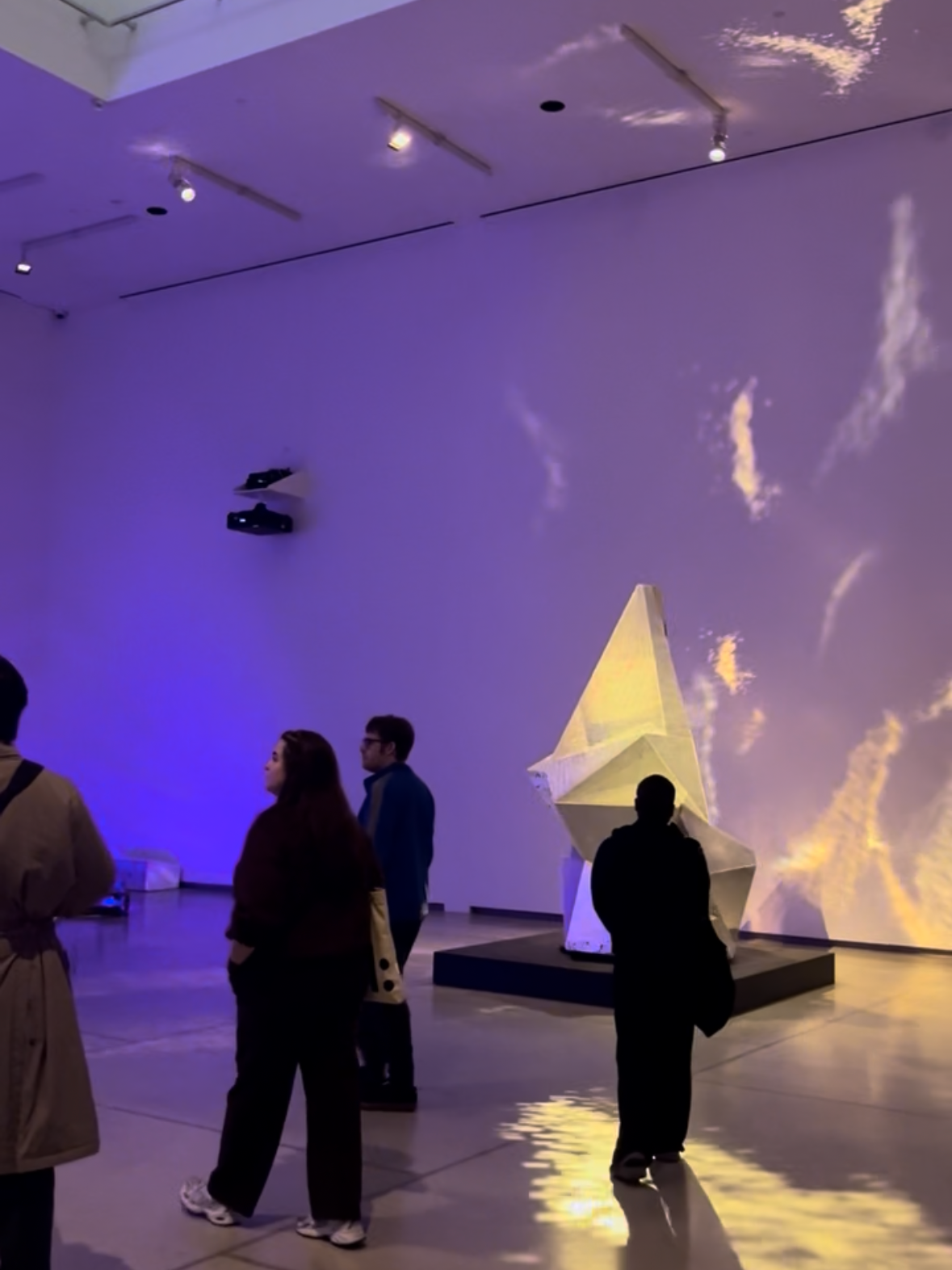
Theaster Gates, “Progress Palace” [2016]
Entering the large room that holds “Progress Palace”[2016] the viewer is engulfed in multicolored lights and the inviting sounds of house music. Floor to ceiling projections titled “House Heads Liberation” light up the left and center wall. The projections are of Frankie Knuckles otherwise known as “the godfather father of house music” repeatedly singing the phrase “There is a House” while accompanied by dancers. To the right front of the space is Gates' work “Houseberg”, a structure reminiscent of an iceberg covered with reflective disco mirrors. “Houseberg” spins melodically while reflecting light around the space, adding to the club ambiance of the room. In the back right corner is “Ghost DJ Booth”, an empty steel frame made to resemble a DJ booth, referencing the ghostly presence of Knuckles. Upon entering, each viewer's energy is noticeably shifted. Visitors begin to sway, laugh, and engage with the room, reflecting without knowing Gates' passion for creating and engaging with themes of community. The room, dedicated to and modeled after the infamous Chicago nightclub “The Warehouse”, memorializes DJ Frankie Knuckles (1955-2014) while touching on themes surrounding the Black queer community.
Gates' interpretation and execution of space and form adds new layers to this concept that pushes past conventionality. It is important to note that the queer community throughout history has been consistently overpowered by queer white voices, despite the trailblazers for this community having been Black queer voices and the communities surrounding them. Gates aims to memorialize and spotlight this truth through his work, inviting the viewer to experience the energy which ultimately birthed the rise of house music. His passion for community and energy within these spaces such as “The Warehouse” is communicated through his sensory encompassing abstract and literal recreation. Gates' work has always had themes of pushing the boundaries of the conventional gallery space through his love of large-scale installation work. “Progress Palace”[2016] specifically offers a new interpretation of exploring themes of home and belonging through a full sensory experience.
In the context of Bright Signs, Gates plays an important role in breaking down the very structure of the traditional euro-centric gallery space. He is using references to historical figures through his video work, and structures to communicate the power within these nightclubs. Outside of the second pair of found doors, illuminating above the doorway, is his final exit work “Neon Baby” inspired by the 19th century data visualization graphs of W.E.B. Du Bois. The neon structure reminiscent of a musical note, encapsulates the goal of Gate’s room making it a perfect exit piece. Referencing through color and form Du Bois data of the areas most populated by Black communities within the US, Atlanta being the eppi-centre in red, these areas are interchangeably also the hubs for the birth of all music and expression. Theaster is honouring through his sculptural work how the black communities in these areas are the ground centre for the creators of beloved expression in our world.
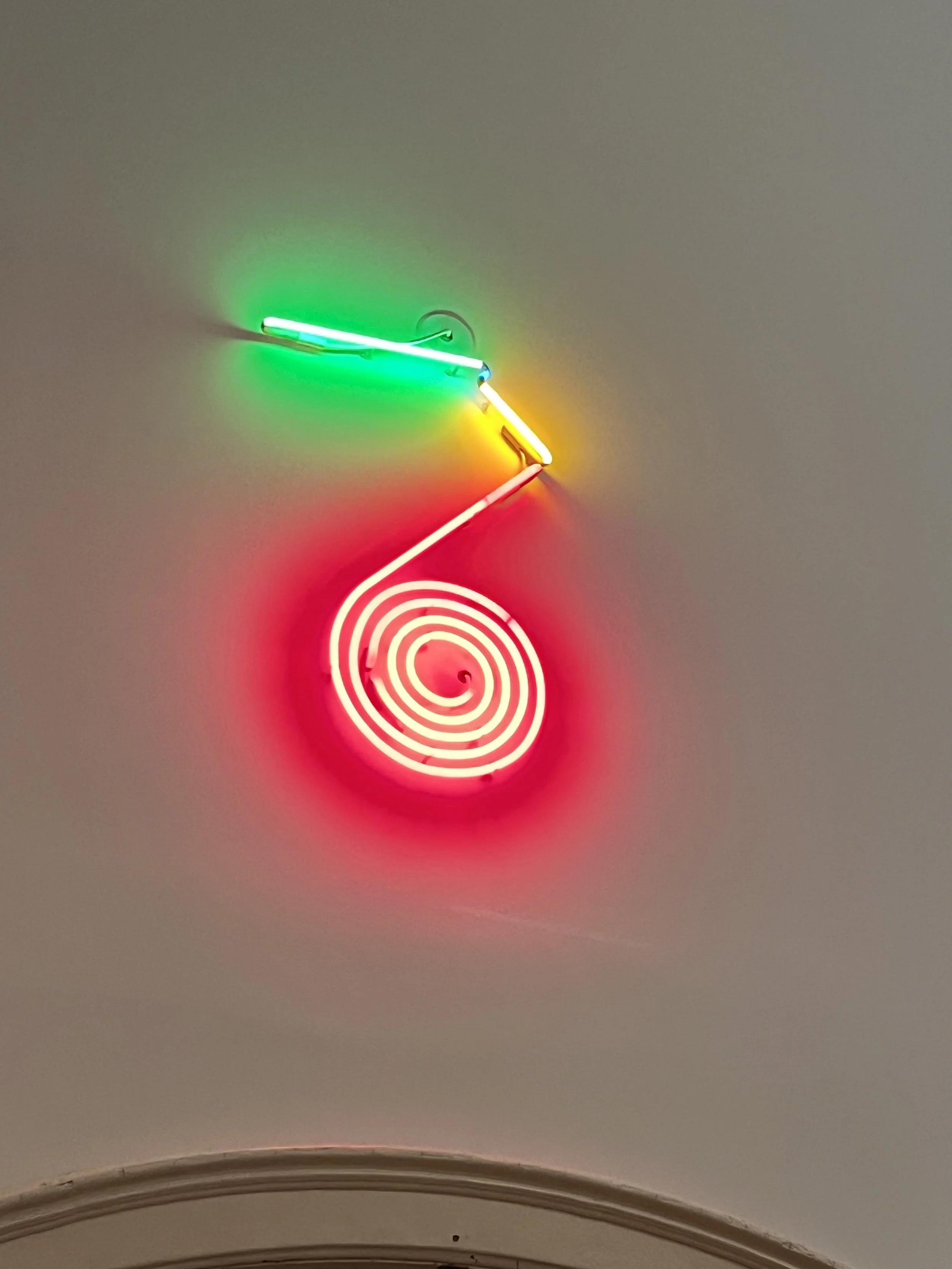
Theaster Gates, “Baby Neon” 2016
As the viewer leaves, the words, “Visibility is a Trap” are once again serving as a reminder to never stop questioning the control that colonial narratives have over our media and perception. Leaving visitors contemplating Kahlil and Gates' work, can visibility be the solution to colonial erasure or must the very conventions and framework of our world instead become broken?
Works Cited
Bright Signs: Spotlight on Video Art. July 3, 2024 - October 14, 2024, Art Gallery of Ontario, Toronto, Ontario.
Grasso, Laurent. Visibility is a Trap. July 3, 2024 - October 14, 2024, Art Gallery of Ontario, Toronto, Ontario.
Joseph, Kahlil. Wildcat. July 3, 2024 - October 14, 2024, Art Gallery of Ontario, Toronto, Ontario.
“NOWNESS Shorts: Wildcat” Nowness, 28 April 2013, https://www.nowness.com/series/nowness-shorts/shorts-on-sundays-wildcat
Gates, Theaster. Progress Palace. July 3, 2024 - October 14, 2024, Art Gallery of Ontario, Toronto, Ontario.