The Vanguard Role of Queer Media Artists in New Media Art History
By Anna Stephen Tanner
April 8th, 2024
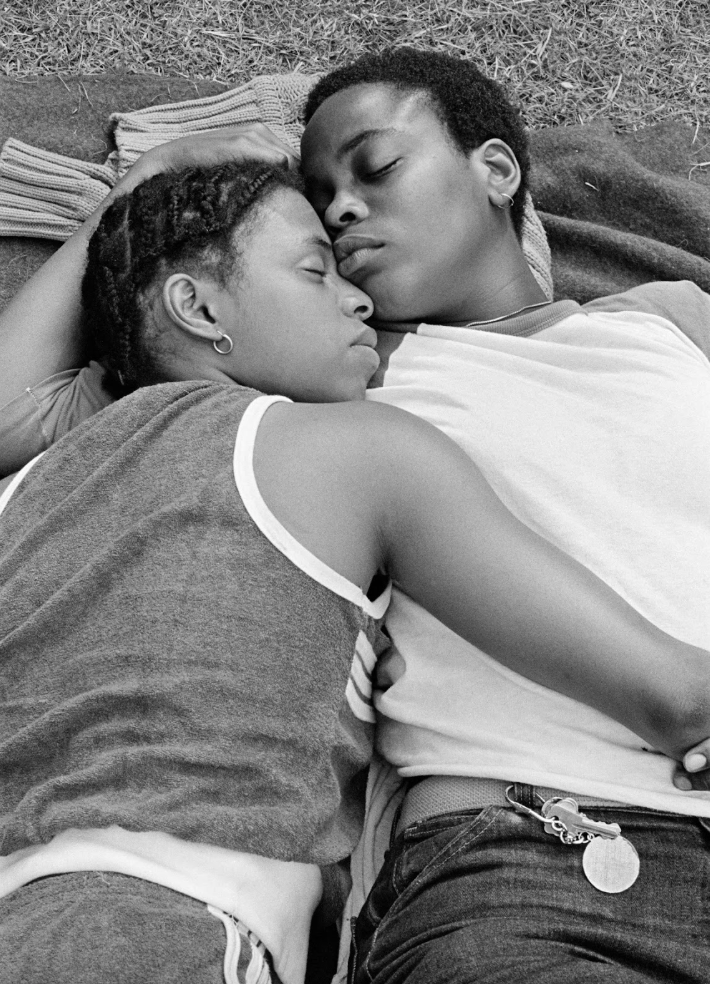
From Joan E Biren, “Eye to Eye: Portraits of Lesbians”
In the landscape of new media art, queer media artists have consistently been pioneers and forward thinkers for the LGBTQ+ civil rights movement and new media art as a whole. Their work stands out as it challenges conventional artistic norms, paving the way for innovative expressions and perspectives. Trailblazers in their field, Barbara Hammer, Joan E Biren, David Wojnarowicz, and Cheryl Dunye have paved the way for queer expression, and gone down in new media art history as some of the most profound artists addressing identity and the queer civil rights movement.
Representation is crucial for the queer community to survive. With the birth of photography and film, an opportunity to spread crucial visibility to the world eased the pain of the once isolating experience of being queer and/or closeted. Arguably, media and the internet has contributed the biggest positive impact to the LGBT movement in particular, normalizing the queer body and spreading representation that was essential to queer folk of the early 80s and 90s. Heather Love, an expert in queer theory, outlines the shift that occurrs when the queer community came into contact with new forms of media,
"the clandestine pursuit of subcultural belonging through analog mechanisms . . . search engines can do a lot of the detective work for young queers these days, and far more efficiently" (Mckinney, 2018)
The fight for visibility is ongoing within the queer community. Especially in new media art, that queer folk chose to use to articulate the feelings, struggles, and complexity of the queer experience.
“without a visual identity, we have no community, no support network, no movement. Making ourselves visible is a political act, making ourselves visible is a continual process” (Joan E Biren in “Lesbian Photography – Seeing through Our Eyes,” in The Blatant Image: A Magazine of Feminist Photography, no. 1, 1981).
This leads us to the revolutionary Barbara Hammer, the mother of the first lesbian film “Dyketactics” in 1974. Hammer’s ‘Dyketactics’ depicts scenes of lesbian love, intimate scenes of hair brushing and aspects of womanhood, intertwined with scenes of nature. The performative aspect of the film, intertwines queer love with nature.
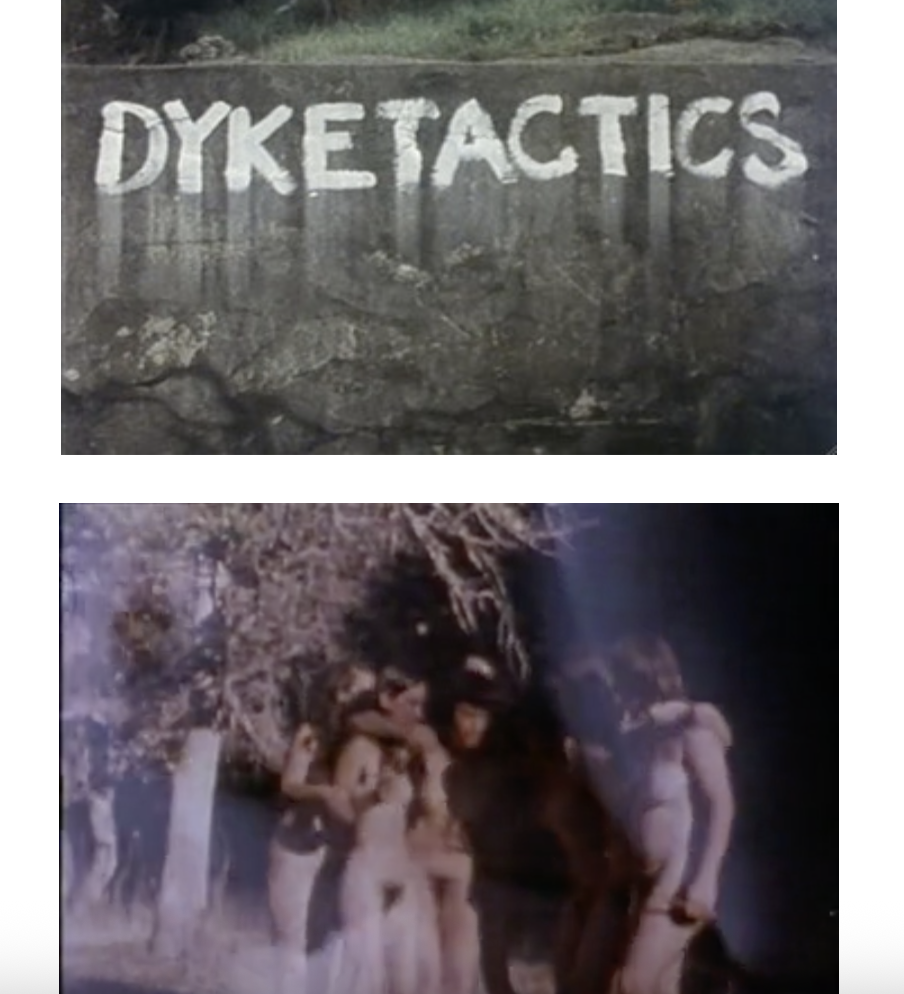
Barbara Hammer, ‘Dyketactics’ 1974
This was a way to normalize how natural and sacred lesbian love is, which was crucial representation through media art at the time. The lack of lesbian representation created by lesbians made this film essential to helping to forward the queer feminist art movement at the time, defying political and religious beliefs.
"the performative act strives to make real what is not yet real, to conjure forth and to confirm a new reality. In other words, the performative seeks to essentialize, to assert new truths at the level of the self and make them stick" (Youmans, 2012)
During the same time as Hammer, Joan E Biren, similarly published the book “Eye to Eye: Portraits of Lesbians” 1979, and just like Hammer, made waves in queer new media history.
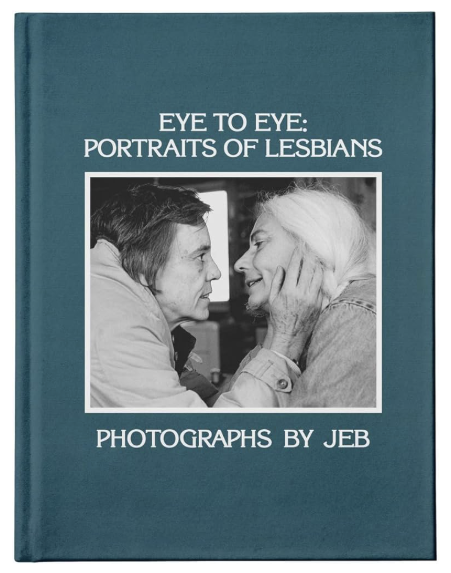
This was the first published photography book with the word ‘Lesbian’ in the title. The book was an archive of lesbian photography and implied lesbian photographs from the 1850-1980, that Biren describes as “Read between the lines” when referring to how the subjects secretly displayed their sexuality. Birens’ goal with the photo book was,
“to take pictures of people that other people weren’t taking pictures of, to make visible what was invisible … I always try to present the entire diversity of our communities. That’s very much on my mind in all of my work” (Biren, 2004).
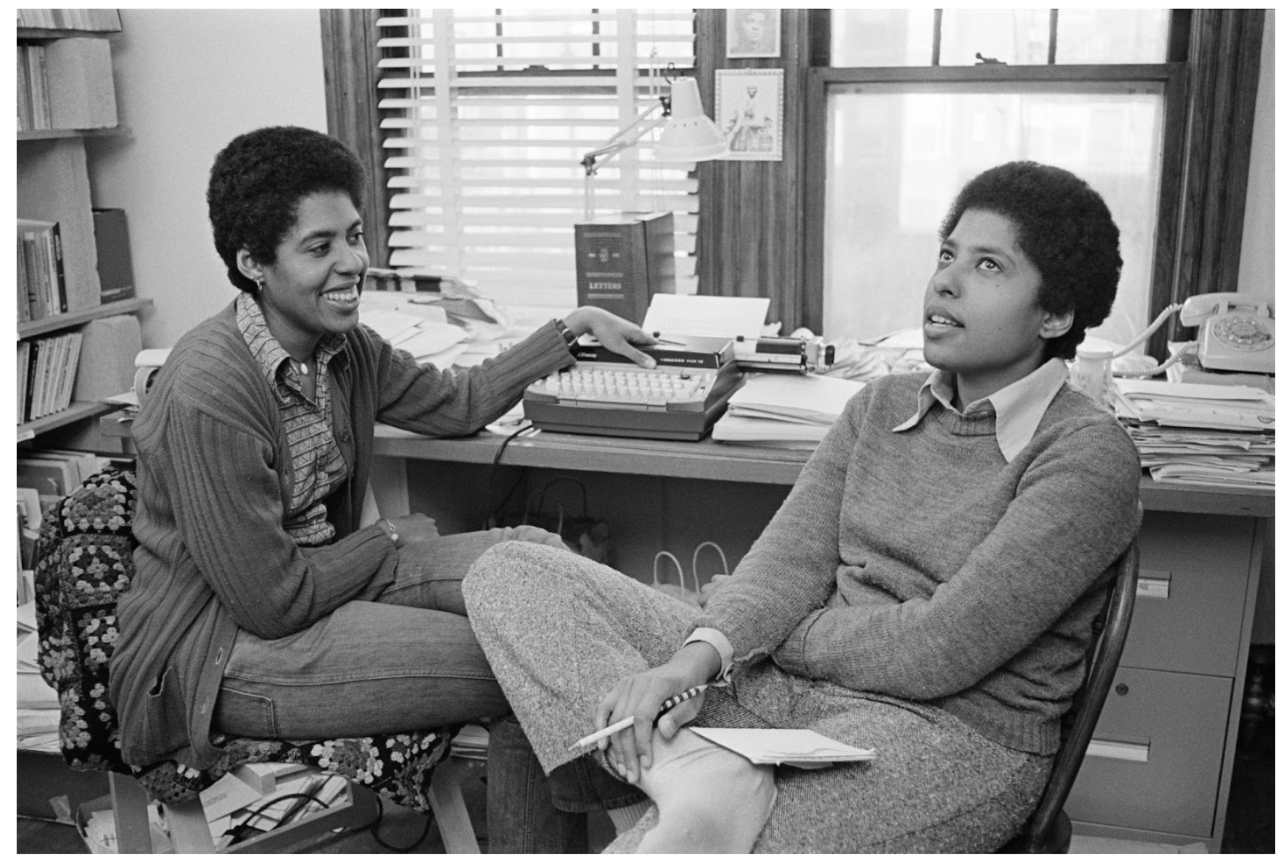
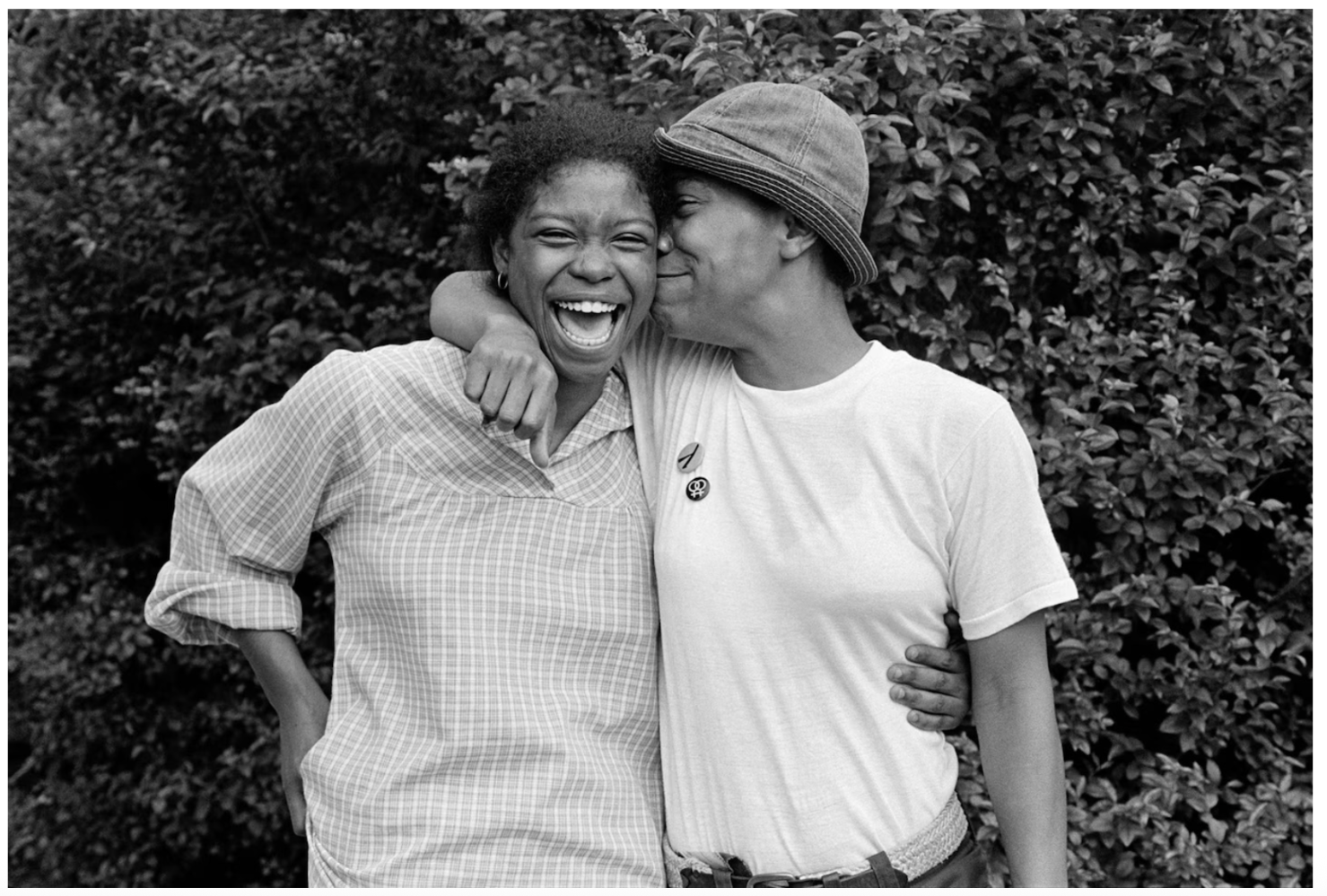
From Joan E Biren,“Eye to Eye: Portraits of Lesbians”, 1979
Biren challenged norms by presenting this work to the Society for Photographic Education’s national conference in the 80s, along with an illuminating lecture on the importance of queer photography. An attendee recalls the impact of the conference as,
“[it] gave many of us, gasping for air in the heavy atmosphere of fine art photography, the lightness we needed to breathe. […] I know the panel to have been a pivotal intellectual event even though the only participant I can actually remember is Joan Biren, the fetching baby dyke introduced by [Martha] Rosler” (Evans, 2022)
Hammer and Biren, and their contributions to the new media art realm constantly remains looked over despite its impact to society at large for allowing queer folk to find community and solace in their work.
Contrasting the glossed over provocative new media lesbian art of the 1970s, leads us into arguably the most popularized era of queer art, the iconic scene of New York’s east village during the 1980s. During this era, queer art was gaining in mainstream popularity, with household names such Jean-Michel Basquiat, Keith Haring, and Andy Warhol dominating the art scene. Amongst this group was gay artist David Wojnarowicz, who began as a traditional artist, and later in his short life, pivoted to depicting the queer experience and the AIDS epidemic through new media art. A pivotal controversial moment in new media history is Wojnarowicz, A Fire in My Belly (1987), a film that remains technically a work in progress. The film is split into two parts, showing split second scenes of super-8 film Wojnarowicz captured from his trip to Mexico City, where he saw many displays of violence, poverty, and hyper masculinity. The scenes are mixed with unsettling imagery he filmed at his apartment, which intertwined together creates an abstract narrative for the viewer to dissect. An iconic scene from the film is the artist, sewing his mouth shut with red thread, a reflection on the suffering of the AIDS epidemic.
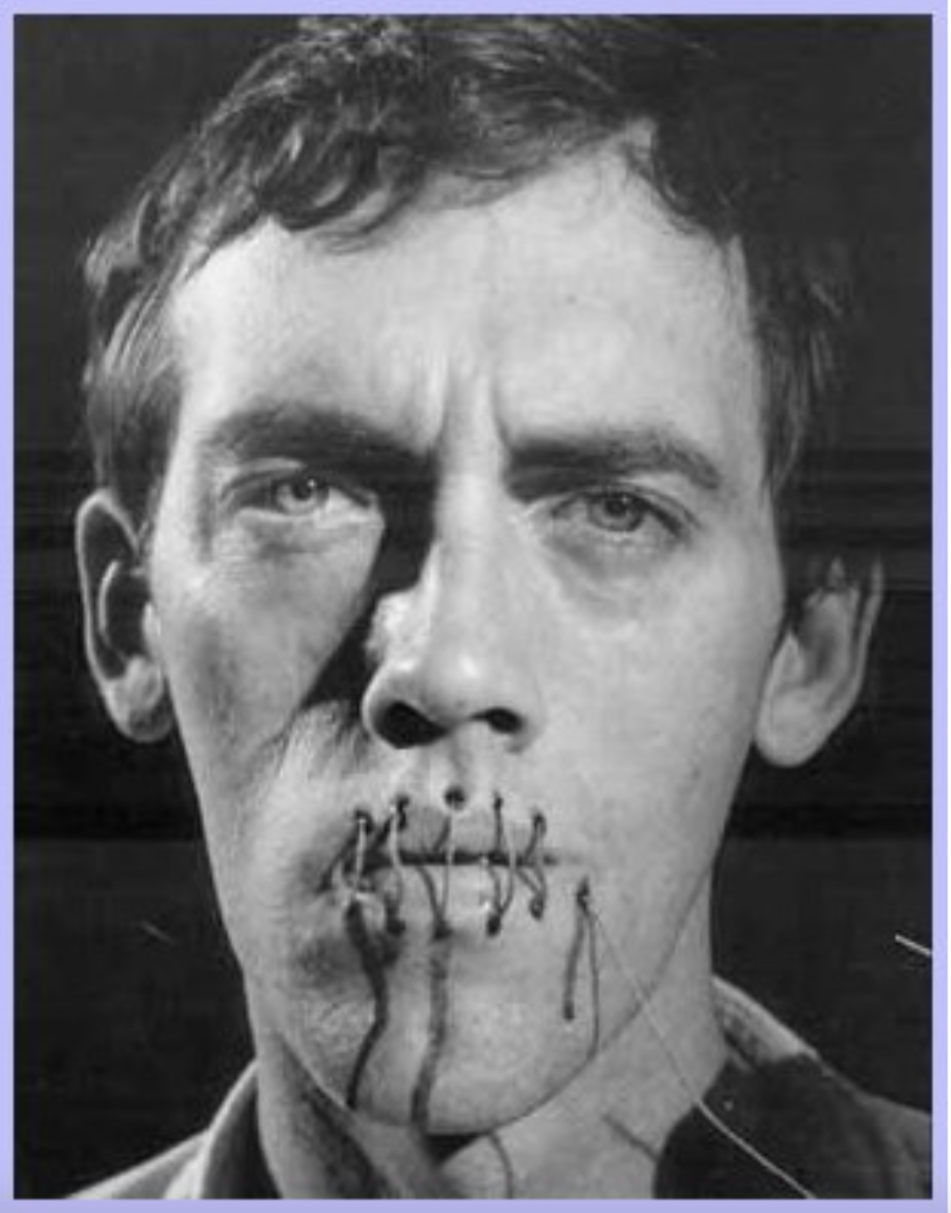
David Wojnarowicz, A Fire in My Belly (1987)
Aiming to challenge political and religious perspectives, the provocative film demonstrates the suffering and conflicting civil rights issues the queer community experienced in the height of the AIDS crisis. The film is notorious for outraging the Catholic League and conservative members of the house of representatives, to the point of forced removal from the exhibition at the National Portrait Gallery because of his “anti-christian” imagery.
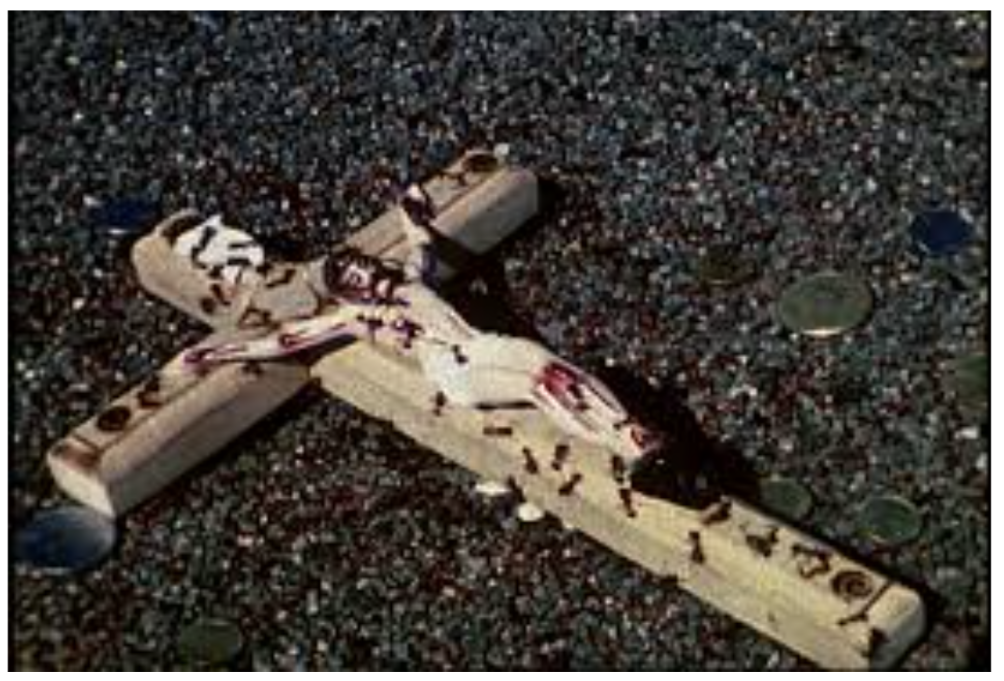
David Wojnarowicz, A Fire in My Belly (1987)
His effects made waves in the new media scene, standing as some of the most prolific and provocative new media art from this era. New media art served as a crucial medium for artists such as Wojnarowicz to communicate the feelings of fear and hate circulating around the queer community. It served as a way of the hetronormative world to understand the epidemic through queer perspective, forcing the queer experience into the mainstream artworld.
Towards the end of the 90s, queer media finally began recognizing the intersections of race and sexuality, and the importance of black queer representation. In the iconic film, "The Watermelon Woman” by Cheryl Dunye, she creates an honest representation of the black lesbian experience.
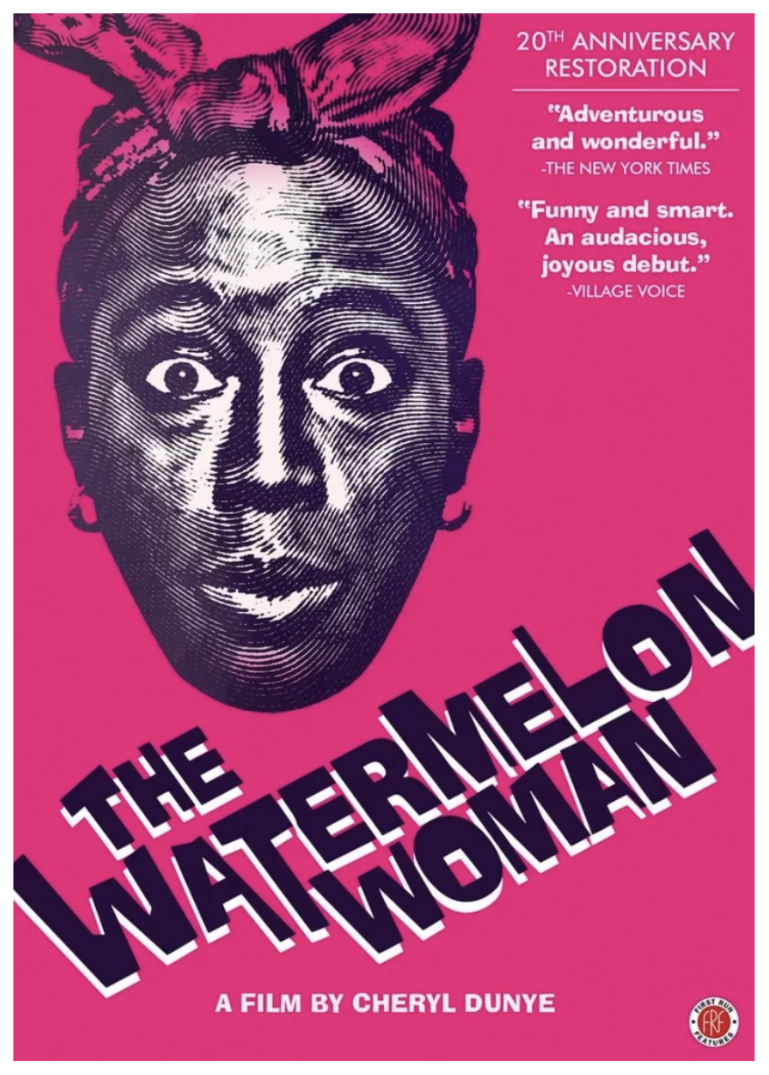
The film was a landmark of the New Queer Cinema and the first US feature directed by an ’out’ Black lesbian. The film follows the artist playing herself, Cheryl, an aspiring filmmaker and her character's interest in Faith Richards, an obscure 1940s black (inferred queer) actress billed as ‘the Watermelon Woman’. Dunye’s character, following her work at a film store and her creation of her documentary, displays what it's like searching for representation for the Black queer experience in media and film at the time.
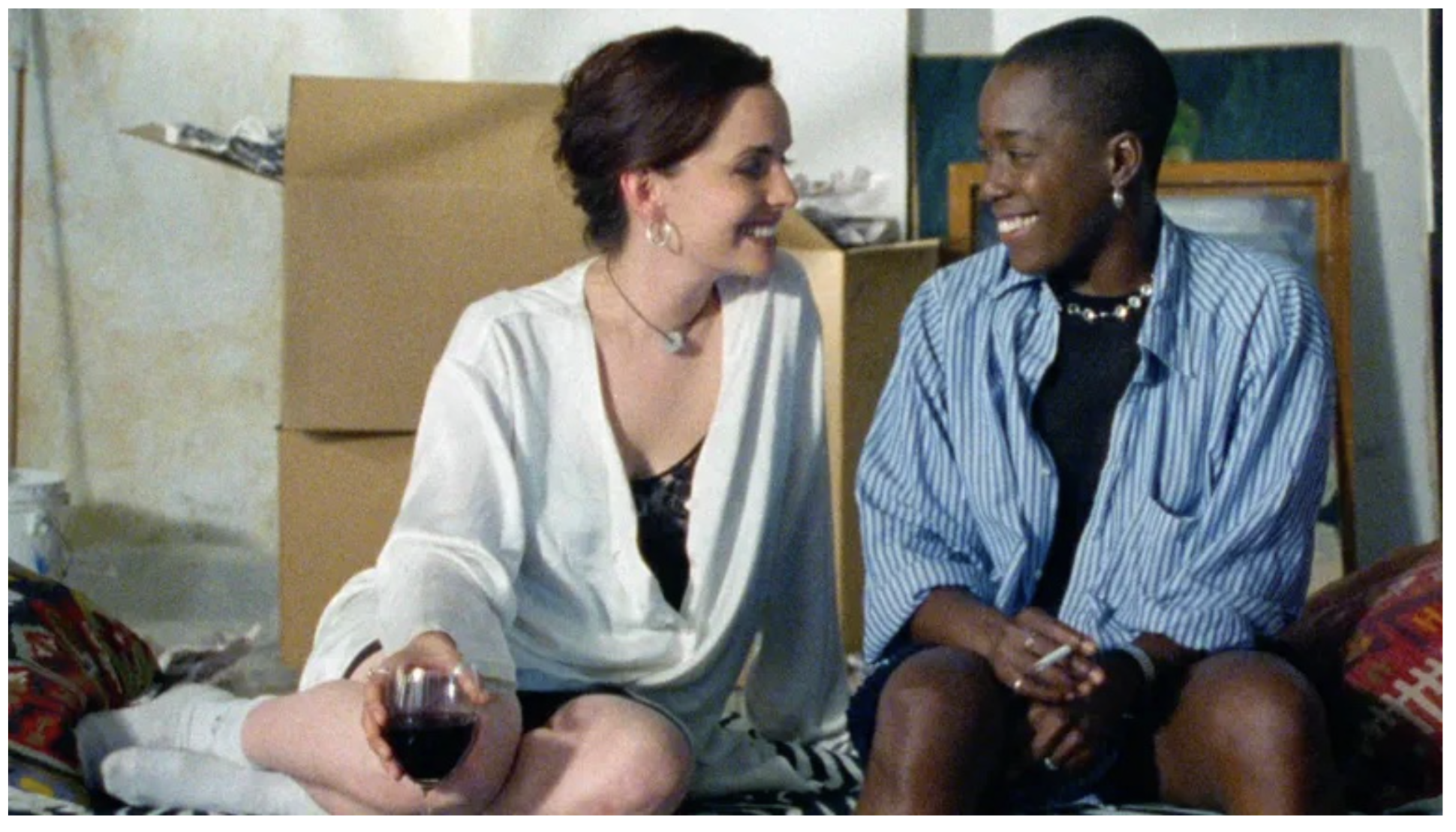
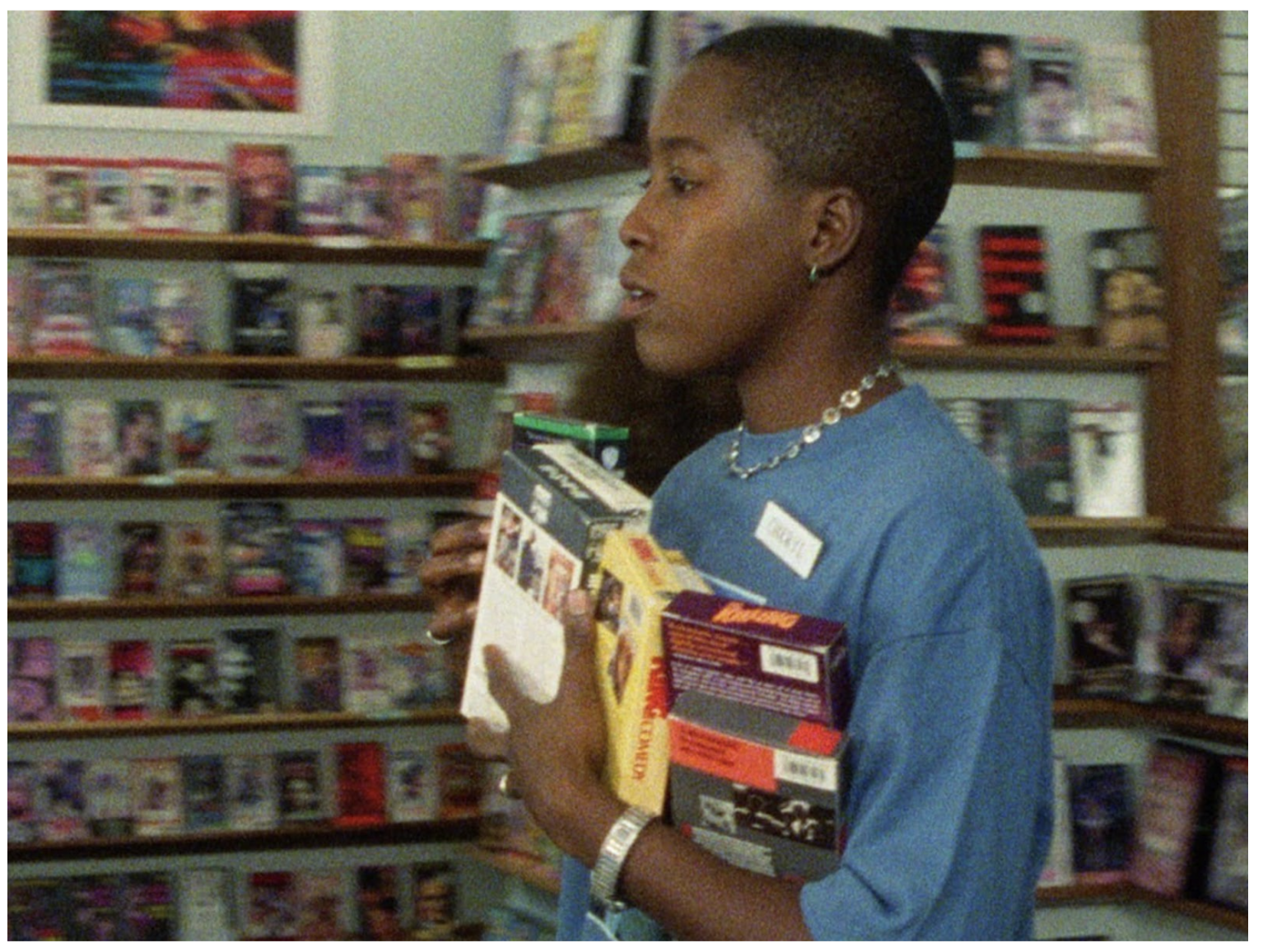
Scenes from The Watermelon Woman, by Cheryl Dunye
Queer cinema of the 1990s, was characterized by the “excess, irreverence and the revolutionary cynicism of the AIDS period.”(Oloukoï, 2021), resulting in works from black gay new media artists, Tom Kalin’s (Swoon (1992)), Todd Haynes (Poison (1991)), and Isaac Julien (Looking for Langston (1989)). These artists, her cis-gay male counterparts ultimately received the most recognition and dominated the queer film scene during this era leaving Dunye’s contributions unnoticed.
Queer new media artists have displayed the ability to shift societal narratives, and make lasting impacts on queer representation within the art world, and media as a whole.
“Queer Utopian practice is about ‘doing’ and ‘building’ in response to the status of nothingness assigned to us by the heteronormative world.” (Rinehart, 2018)
New media art has been a medium that has changed the queer community indefinitely, and many queer lives have been impacted because of the representation that Barbara Hammer, Joan E Biren, David Wojnarowicz, and Cheryl Dunye created. Queer folk have historically been at the forefront of social change and creative expression, and new media art is an essential example of just how much change we are able to achieve.
Works Cited
McKinney, Cait. ""Finding the Lines to My People": Media History and Queer Bibliographic Encounter." GLQ: A Journal of Lesbian and Gay Studies 24, no. 1 (2018): 55-83. muse.jhu.edu/article/686234.
Biren, Joan E. (JEB). Eye to Eye: Portraits of Lesbians. Washington, D.C.: Glad Hag Books, 1979. Reissued by Anthology Editions, New York in 2021.
Youmans, Greg. "Performing Essentialism: Reassessing Barbara Hammer's Films of the 1970s." Camera Obscura 81.27 (2012): 101-35. Print.
Biren, Joan. “‘Talking History: Jeb’ Panel Discussion.” Rainbow History Project Digital Collections, March 6, 2004. https://archives.rainbowhistory.org/items/show/1316.
Evans, Ariel. “‘This Show Is for Women:’ Photography after Lesbian Photography.” Miranda, no. 25 (April 20, 2022). https://doi.org/10.4000/miranda.44548.
Oloukoï, Chrystel. “The Watermelon Woman at 25: The Black Lesbian Classic That Wears Its Brilliance Lightly.” BFI, February 27, 2021. https://www.bfi.org.uk/features/watermelon-woman-cheryl-dunye.
Rinehart, Richard. “Queering New Media Art : Histories & Asking Questions about Nothing.” Media-N 14, no. 1 (September 26, 2018): 78–80. https://doi.org/10.21900/j.median.v14i1.59.